| Getting your Trinity Audio player ready... |
Highlights
- Choosing the right type of business plan gives clarity on your next steps and aligns your plan with your current business stage.
- Each plan, startup, operational, strategic, feasibility, lean, and more supports a different goal and helps you move in the right direction.
- Matching your situation with the right business plan model prevents costly mistakes and improves decision-making.
- A clear plan helps you operate better, grow smarter, attract investors or lenders, and stay focused on long-term goals.
Introduction
The business success stories you hear usually highlight the wins, the funding, the growth, yet they skip the messy middle where the real magic happens.
You can work from the perfect idea, the perfect product, even the perfect team, and still feel stuck simply because there is no smart planning to make all of it work.
That’s when a business plan comes in, a strategic plan to execute your business idea. But, there’s no one-size-fits-all. There are different types of business plan models for different businesses and their stages.
Did you know, businesses are 2X more likely to secure funding when they use the right type of plan for investors.
Each one solves a different problem, unlocks a different opportunity, and shapes a different future. Once you see the differences, the entire roadmap becomes clearer, and the decisions that felt foggy suddenly make sense.
This blog is here to give you that clarity. Simple. Direct. Creator-style. And just enough perspective to make you rethink how you’ve been planning until now.
Let’s break it open.
What is a Business Plan?
A business plan is a roadmap that explains what your business is, how it works, what you want to achieve, and how you’ll get there. It turns your idea into a clear strategy by outlining your goals, your target customers, how you’ll make money, and what resources you need to grow.
Think of it as a guide that helps you stay focused, make better decisions, and communicate your vision clearly to yourself, your team, or your investors.
Let’s understand better with a simple example:
Imagine you want to start a homemade cookie brand called Sweet Crumbs.
Your business plan would include things like:
➔ Business idea: Selling fresh, handmade cookies in unique flavors.
➔ Target customers: College students and young professionals looking for quick treats.
➔ How you’ll make money: Selling individual cookies, bundle boxes, and monthly subscription packs.
➔ Marketing plan: Social media promotions, campus pop-ups, influencer collabs.
➔ Startup costs: Ingredients, packaging, kitchen equipment, and branding.
➔ Goals: Selling 500 cookie boxes in the first three months and launching an online store.
This simple plan gives you direction, clarity, and a way to track progress as the business grows.
But why do businesses need different types of business plans? Let’s keep reading to understand it.
Also Read: Top Small Scale Businesses to Start in India
Why Do Businesses Need Different Types of Business Plans?
Because a business doesn’t stay the same, and neither should the plan behind it. Every stage, goal, or challenge requires a different level of detail, direction, and strategy. In other words, one plan can’t do everything.
Different types of business plans help you:
1. Stay aligned with your current stage
Early-stage ideas need speed and flexibility, while established operations need structure and clarity, and the right plan helps you stay aligned based on the stage you are at.
Example:
When you’re just starting out, a simple plan helps you explore your idea & adjust quickly. But once things begin working and responsibilities grow, you naturally shift into a more detailed plan that outlines a long-term strategy. It’s the same business, just at a different stage, needing a different plan.
2. Avoid overwhelm
You don’t always need a long, formal plan. Sometimes a short blueprint is enough to move forward.
Example:
If you’re brainstorming and validating your concept, a one-page plan gives you direction without slowing you down. As you grow, you can expand it into a more complete plan with financials, timelines, and projections.
3. Build clarity for yourself and others
Different audiences need different levels of information, and each type of plan helps you communicate more effectively.
Example:
Your internal plan may focus on goals, milestones, and the next steps for your team. But when sharing your vision with stakeholders or partners, you might use a more polished plan that highlights numbers, strategy, and expected outcomes.
4. Make smarter decisions
A plan tailored to your needs gives you direction, helping you choose what’s best instead of guessing.
Example:
When evaluating multiple opportunities, a structured plan helps you compare options, set priorities, and choose the path that aligns with your capacity and goals. It turns decision-making from gut feeling into something intentional.
5. Adapt quickly as things change
Business environments shift, and having the right type of plan makes it easier to update your direction.
Example:
If trends, costs, or customer needs change, a flexible plan helps you pivot without rewriting everything from scratch. Your plan grows with the business instead of holding it back.
Also Read: How Can You Start an Online Business With No Money?
Different Types of Business Plans You Should Know
When it comes to building or growing a business, there’s no such thing as a one-size-fits-all approach. Every stage of your journey needs a different kind of clarity and a business plan.
Some moments call for a detailed roadmap, some need a fast, flexible outline, and others require a plan built specifically for investors, lenders, or long-term growth.
That’s why there are so many different types of plans in each one, designed to support a different goal, challenge, or phase of your business.
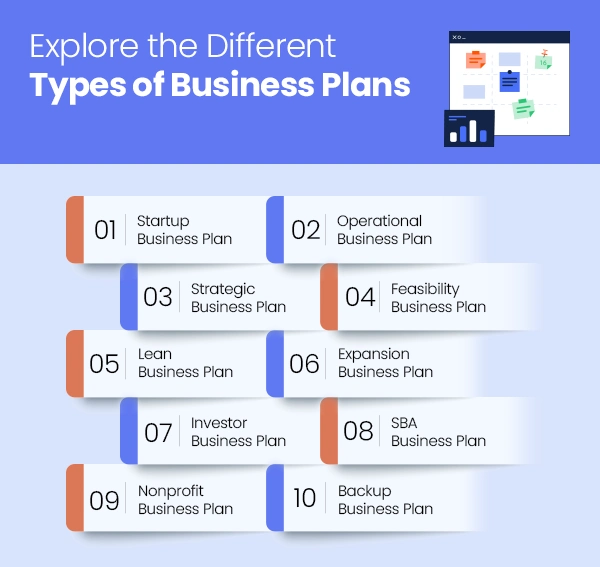
1. Startup Business Plan
A Startup Business Plan is the starting map for your new business. It takes your idea, your customers, how you’ll earn money, and your launch plan and puts it all in one clear place. It helps you move from I have an idea to I know exactly what to do next.
➢Stage: Used when you’re shaping and launching a new business.
➢How It Helps
It gives you clarity and confidence. When you write out your audience, pricing, market, and goals, things that felt fuzzy start making sense. You also make better decisions because you’re not guessing; you’re working with a plan that actually guides you.
It’s also easier to talk to people who might support or join your business because your vision is clear and structured.
2. Operational Business Plan
An Operational Business Plan shows how your business runs every day. Think of it as your behind-the-scenes manual for tasks, roles, tools, and routines.
➢ Stage: Used when your business is already running, and you want things to feel smoother, clearer, and more organized.
➢ How Does it Help
It removes guesswork from daily work. When everyone knows what to do, when to do it, and how things flow, the business becomes easier to manage.
It also helps you run more efficiently, avoid delays, and keep everyone aligned, especially when the team grows or responsibilities increase.
➢ How to Create It
- List your recurring tasks.
- Map how work flows from start to finish.
- Assign clear roles.
- Document the tools and systems you use.
- Set simple performance goals.
- Add timelines or checkpoints.
Also Read: Licenses Needed to Start a Business in India
3. Strategic Business Plan
A Strategic Business Plan is your big-picture guide. It explains where you want your business to go in the next few years and the key moves you’ll make to get there.
➢ Stage: Used when you’re planning growth, expansion, or a major shift.
➢ How It Helps
It keeps you focused on the future instead of getting stuck in daily tasks. With a clear vision and goals, it’s easier to choose the right opportunities and ignore the ones that don’t fit your long-term direction. It also aligns your team because everyone knows the destination and the strategy behind it.
➢ How to Create It
- Write your long-term vision.
- Understand your market and competitors.
- Choose how you want to grow.
- Set goals for the next 1–3 years.
- List your big action steps.
- Decide how you’ll track progress.
4. Feasibility Business Plan
A Feasibility Business Plan helps you check whether your idea is actually worth pursuing.
It focuses on one big question: Will this work?
Instead of jumping straight into execution, this plan lets you explore whether people want your idea, whether the numbers make sense, and whether the opportunity is strong enough to move forward.
➢ Stage: Used before committing to a new idea, product, or business.
➢ How It Helps
It protects you from investing time, money, and energy into something that might not succeed. By looking at demand, competition, costs, and risks, you get a clear picture of whether your idea is realistic or needs more refinement. This gives you confidence, either to go ahead or to adjust the idea before launching.
➢ How to Create It
- Describe the idea you want to test.
- Understand if people actually need or want it.
- Look at who else is offering similar solutions.
- Estimate your basic costs and earning potential.
- Identify risks or challenges.
- Decide if the idea is worth pursuing, improving, or dropping.
Also Read: Types of Business Models Startups Should Know
5. Lean Business Plan
A Lean Business Plan is a short, focused version of a full business plan. It skips the long pages and captures only the essentials: your value, your customers, how you’ll make money, and what steps you’ll take next. It’s built for speed and flexibility.
➢ Stage: Used during early testing, brainstorming, or anytime you need a quick, adaptable plan.
➢ How It Helps
It helps you move fast without overthinking. You can test ideas, adjust strategies, and update your plan quickly as you learn what works. Instead of getting stuck in a long planning process, you stay focused on action.
It’s also great for sharing early ideas with your team or potential collaborators because everything is simple and easy to understand.
➢ How to Create It
- Write your value proposition in one clear line.
- Define who you’re targeting.
- Explain how you’ll earn revenue.
- List your key activities and resources.
- Note your main partners or channels.
- Add your basic costs.
- Write down your immediate next steps.
6. Expansion Business Plan
An Expansion Business Plan outlines how you’ll grow your business, whether you’re entering new markets, adding new products, scaling your team, or opening additional locations. It focuses on growth steps rather than starting from zero.
➢ Stage: Used when your business is stable, and you’re ready to take the next big step.
➢ How It Helps
It gives you clarity on how to scale without losing control. When growth is planned properly, you avoid overspending, hiring too fast, or moving into opportunities that aren’t the right fit.
This plan helps you understand what resources you need, how growth will impact your current operations, and what changes you must prepare for as the business expands.
➢ How to Create It
- Define your growth goal.
- Understand the new market or audience you want to reach.
- Outline what you need: team, tools, budget, systems.
- Map how this expansion will connect with your current business.
- Create financial projections for the new phase.
- Set clear milestones for your expansion timeline.
Also Read: Types of eCommerce Websites and Models
7. Investor Business Plan
An Investor Business Plan is designed for investors and businesses to prepare when they are eyeing investments for their business. It focuses on your business model, growth potential, market opportunity, competitive edge, financial projections, and how investors will benefit.
➢ Stage: Used when you’re raising funds for your business.
➢ How It Helps
It helps you tell a strong, compelling story that investors care about. Instead of explaining everything your business does, this plan highlights the opportunity, the scalability, and the return on investment. It builds confidence by showing that your business has traction, a clear plan, and the potential to grow.
➢ How to Create It
- Explain your core idea and what makes it valuable.
- Show the market size and opportunity.
- Highlight your traction or early wins.
- Explain your competitive edge.
- Add strong financial forecasts and revenue potential.
- Describe how investor money will be used.
- Show the expected return for investors.
8. SBA Business Plan (for Loan Applications)
An SBA Business Plan is a detailed plan required when applying for loans (especially in the U.S.), and it is presented to banks, credit unions, and financial institutions. It covers your business’s purpose, finances, operations, market research, and ability to repay the loan.
➢ Stage: Used when you’re applying for a business loan or seeking financial support.
➢ How It Helps
It shows lenders that your business is stable, structured, and capable of handling the funds responsibly, and also has the potential to repay them within the specific time period. Lenders want the assurance for their money, and this plan offers that.
A clear plan increases your chances of loan approval because it reduces the lender’s risk and shows that you’ve thought through your financial responsibilities.
➢ How to Create It
- Describe your business in detail.
- Include complete financial statements and forecasts.
- Explain your market, audience, and competitors.
- Outline your operations and management structure.
- Show how much funding you need and why.
- Demonstrate how the loan will help the business grow.
- Provide a repayment plan.
Also Read: 15 Best Websites For Entrepreneurs
9. Nonprofit Business Plan
A Nonprofit Business Plan explains the purpose of your nonprofit, the community or cause you serve, how you’ll create impact, and how you’ll fund your programs. Instead of focusing on profit, it focuses on mission and sustainability.
➢ Stage: Used when starting a nonprofit or organizing existing programs with a clearer structure.
➢ How It Helps
It helps you stay aligned with your mission while building a sustainable model. When you outline your goals, beneficiaries, programs, and funding streams, it becomes easier to make decisions and measure progress. It also helps when applying for grants, approaching donors, or collaborating with partners because they clearly understand the impact you want to create and how you plan to achieve it.
➢ How to Create It
- Write your mission and purpose.
- Describe the community or problem you aim to support.
- Outline your programs or services.
- List how you’ll raise funds (donations, grants, events, sponsorships).
- Define your operations and team structure.
- Add budgets and financial needs.
- Set impact goals and how you’ll measure success.
10. Backup Business Plan
A Backup Business Plan is your Plan B, a safety plan that helps you stay prepared if things don’t go as expected. It outlines alternative strategies, backup revenue options, and steps to take during unexpected challenges.
➢ Stage: Used at any stage of business, but especially when dealing with uncertainty or planning ahead for risk.
➢ How It Helps
It gives you peace of mind because you’re not caught off guard when changes happen. Whether you face a sudden drop in sales, a market shift, or resource limitations, you already know your next move. It keeps the business steady by helping you pivot quickly instead of panicking or slowing down. A strong backup plan reduces risk and increases resilience.
➢ How to Create It
- List potential risks your business may face.
- Prepare alternative strategies for each risk.
- Identify backup revenue streams or cost-cutting options.
- Define steps to keep operations running during challenges.
- Outline who will handle what during a shift or emergency.
- Keep the plan flexible so it can be updated easily.
Also Read: Why Do You Need To Be Careful About Monitoring Competitors?
How to Choose the Right Type of Business Plan Simplified!
If you are still confused and overwhelmed, we have explained all the different types of plans in business in short. So, whenever you are confused or are wondering which business plan suits your business the most(as per the current stage), then the table below will make things easier for you.
| Your Situation | What You Need | Best Business Plan Type | Why This Plan Fits |
|---|---|---|---|
| You’re turning an idea into a real business | A clear launch direction | Startup Business Plan | Gives structure, helps validate your idea, and maps out your launch steps. |
| Your business is running, but daily operations feel messy or unclear | Better systems and workflow clarity | Operational Business Plan | Helps streamline tasks, roles, and processes so the business runs smoothly. |
| You’re planning long-term growth or expansion | A big-picture roadmap | Strategic Business Plan | Aligns your team, sets long-term goals, and guides major decisions. |
| You have an idea, but aren’t sure if it’s worth pursuing | Idea validation | Feasibility Business Plan | Helps you check demand, risks, and profitability before investing too much. |
| You need a quick plan to test ideas or make fast decisions | Speed + flexibility | Lean Business Plan | Lightweight, easy to update, and perfect for early testing or rapid changes. |
| Your business is ready to expand into new markets, products, or locations | A growth-focused direction | Expansion Business Plan | Helps plan resources, timelines, and the financial impact of expansion. |
| You’re raising money or pitching investors | A funding-focused plan | Investor Business Plan | Highlights market opportunity, growth potential, and ROI for investors. |
| You’re applying for a business loan | A detailed, lender-ready plan | SBA Business Plan | Includes financials, repayment ability, and business stability that lenders want. |
| You want a safety plan for unpredictable situations | Backup strategies | Backup Business Plan | Helps you stay prepared and pivot smoothly during challenges. |
| You’re running or starting a nonprofit | Mission-focused clarity | Nonprofit Business Plan | Shows your programs, impact goals, funding sources, and sustainability model. |
Also Read: Types of Brand Names To Inspire You For Next Big Idea
Mistakes to Avoid When Creating Different Types of Business Plan Models!
According to CB Insights, 45% of businesses fail due to poor planning, unclear goals, or wrong assumptions, while the SBA reports that companies using the right type of business plan for their stage are far more likely to survive and grow.
If you choose the wrong plan or skip the planning basics, the mistakes can cost you time, money, and opportunity. Here are the most common mistakes to avoid when creating any business plan.
➢ Writing a plan without understanding your market
A shocking 42% of businesses fail because there’s no real market need for what they’re offering. Don’t skip research, it’s the one thing that keeps your plan grounded in reality.
➢ Ignoring your competitors
Businesses often assume they have no competition, and that’s a red flag. Competition always exists, either direct or indirect. Knowing who you’re up against helps you position yourself better.
➢ Trying to create one massive plan for everything
Each stage needs a different type of business plan. A single generic plan won’t help with launching, scaling, or getting funding. Remember: businesses using the right plan for the right phase are 2X more likely to grow.
➢ Overestimating revenue and underestimating costs
This is one of the biggest startup killers. According to SCORE, 50% of new businesses underestimate how much money they’ll need. Keep numbers realistic, not optimistic. And here, research is the key.
➢ Not defining your customer clearly
If your plan says everyone is my customer, your business is already in trouble. Companies with a clearly defined target audience grow 30% faster. So, make sure to define your target audience and act accordingly.
➢ Skipping financial projections because they’re too complicated.
Investors and lenders will not take you seriously without numbers. Even simple projections help you understand whether the idea is financially possible.
➢ Making the plan too long and unreadable
A business plan is supposed to guide you, not exhaust you. Keep it clear, simple, and focused. Most investors say they prefer concise plans that highlight the opportunity, not a 40-page document.
➢ Not updating the plan as your business grows
As markets shift, customer needs change, and you move between the different types of plans in business, your strategy must change too. Businesses that review and revise their plan regularly are 30% more likely to grow successfully (SmallBizTrends).
➢ Leaving out execution steps
A plan without actions is just a document. Your plan should clearly show what you’ll do next, who’s responsible, and what the timeline looks like. Execution is where most plans fall apart.
➢ Forgetting about risks and backup strategies
Every business faces uncertainty. Companies with a backup plan bounce back faster and avoid major losses during unexpected shifts.
Conclusion
Here’s the wrap on what the different types of business plans you should know about are, why it’s important to choose, and mistakes to avoid. Your business deserves a plan that works for you, not against you. We hope this is the starting point of something meaningful and helpful.
And, just a little reminder: you can choose the plan that fits your stage, your goals, and the kind of clarity you need right now. One that grows with you, adapts with you, and pushes you toward smarter moves, not harder ones.
And if somewhere along the way your business plan includes getting a hosting solution, Host IT Smart can help you build that foundation confidently and affordably.
Good luck!
Frequently Asked Questions
Start by looking at your goal: launching, scaling, validating, or fundraising. Your goal will guide you toward the right option when choosing from the different types of business plans.
No. Lean plans keep it simple, while investor and SBA plans require deeper projections. That’s why understanding the different types of business plan models matters.
You can mix elements from multiple formats. Many businesses blend different types of plans in business to create a plan that fits their unique situation.
Update it anytime your direction changes. New goals, new markets, or new challenges often require switching to a different type of business plan model.
Yes. Even a simple lean plan helps with clarity, focus, and decision-making, no matter which of the different types of business plans you choose.
A Lean Business Plan. It’s the simplest starting point among the different types of business plan models because it focuses only on essentials.
Not ideally. Investors expect a different structure than what your team needs. That’s why different types of business plan models exist for different audiences.