Highlights
- Start with proper keyword research to target topics your audience is actively searching for.
- Build a strong SEO foundation with optimized site structure, fast loading speed, mobile responsiveness, and technical SEO basics.
- Create high-quality, search-focused content consistently to improve rankings and attract organic traffic.
- Optimize every page with proper titles, meta descriptions, internal linking, headings, and image SEO.
- Use link building, performance tracking, and regular SEO updates to grow rankings faster and maintain long-term visibility.
Introduction
Here’s what nobody tells you when you’re starting out: Google doesn’t owe your site a single visitor. Trust has to be earned, through the right content, the right technical setup, and a strategy that actually matches how search works in 2026. Without that, even the best website stays invisible.
The good news? Most of your competitors are still following advice from 2019. The playbook has changed, and the sites that understand the new rules have a real edge, even starting from zero.
Around 53% of all website traffic comes from organic search, more than paid ads, social media, and direct traffic put together. When you’re starting with no brand and no budget, that number is your entire opportunity.
This guide is everything we wish someone had handed us when we launched our first site. No fluff, no outdated advice, no vague theory. Just a clear, step-by-step plan for getting a brand-new website found in 2026.
Understanding SEO Basics
➢ What is SEO?
SEO stands for Search Engine Optimization. Simply put, it’s the work you do to help search engines understand your website and show it to the right people at the right time.
But SEO in 2026 isn’t just about Google finding your pages. It’s about Google trusting your pages enough to show them. That trust is built through good content, a clean technical setup, and a reputation earned from other sites linking to you.
Here’s how the whole process works, step by step:
★ Crawling — Google sends out bots called Googlebot that explore the web by following links. They find your pages through your sitemap, your internal links, and any external sites that link to you. Brand new websites get less attention at first because Google hasn’t established any trust yet.
★ Indexing — Once Google finds your pages, it reads them, processes what they’re about, and stores them in its massive index. Modern crawlers actually render your pages like a browser would; they run JavaScript and see your content the way a real visitor does.
★ Understanding Intent — When someone types a search, Google doesn’t just match keywords. It tries to figure out what the person actually wants. Are they trying to learn something? Buy something? Find a specific website? The same keyword can mean different things in different contexts, and Google is remarkably good at telling the difference.
★ Ranking — Google then ranks results based on hundreds of factors: how relevant your content is, how trustworthy your site is, how fast your pages load, and how well your content matches what the searcher needs.
★ Showing Results — The results page isn’t just a list of blue links anymore. It might include AI-generated summaries, featured snippets, videos, images, local maps, and more. Your job is to appear in the formats your audience actually looks at.
★ Read and have patience: New sites start at a disadvantage because Google treats them like strangers. No backlinks, no history, no user behavior data. Everything you do in the early months is about building the proof that you’re legitimate and worth showing to people.
Also Read: How to Benchmark Website Performance – A Complete Guide
➢ Core SEO Types
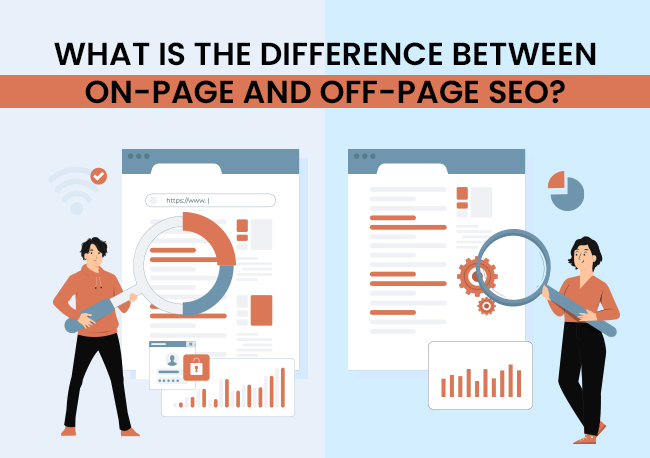
Think of SEO as three separate systems that include on-page SEO, technical SEO, and off-page SEO that all need to work together.
★ On-Page SEO is everything you control directly on each page. Your title tags, meta descriptions, headers, content quality, keywords, internal links, images, schema markup, and URL structure all fall here. It’s about making each page as clear and useful as possible, for both Google and your readers.
★ Technical SEO is your site’s infrastructure. Page speed, mobile-friendliness, site architecture, HTTPS security, crawlability, and canonical tags, if any of this is broken, your content won’t rank, no matter how good it is.
★ Off-Page SEO is your reputation on the wider internet. Primarily, backlinks from other websites point to yours. When another site links to you, it’s essentially vouching for your content. Google uses these votes of confidence to measure authority. You can’t fake this sustainably. It has to be earned.
Also Read: Which Functions are the Important on a Website?
How AI is Changing Search Results?
➢ Google AI Overviews & Zero-Click Searches
Since Google rolled out AI Overviews in 2024, the results page looks very different. Instead of just showing links, Google now generates an AI-written summary right at the top, pulling answers from multiple sources so users never need to click through.
60% of Google searches now end without a single click to any website. Sounds alarming, but it mostly hits simple informational queries, quick facts, basic definitions, and simple how-tos. Commercial searches, comparisons, and anything requiring real depth still drive plenty of clicks.
There’s also a silver lining. AI Overviews cite their sources, and getting cited inside one is the new featured snippet, high visibility, qualified traffic, and a strong trust signal.
➢ Conversational Search Behavior
People search differently now. Instead of typing email marketing software, someone types, What’s the best email marketing tool for a small online store under $50 a month. Google’s AI understands these natural, conversational queries, which means long-tail, specific keywords for SEO are more valuable than ever for new sites.
➢ Why Ranking #1 Isn’t Enough Anymore
Here’s something that surprises a lot of people: the top organic result doesn’t always get the most clicks. The #1 organic result captures around 27.6% of clicks, but that share drops when AI Overviews, featured snippets, and People Also Ask boxes fill the space above it.
What should you do? Your goal isn’t just to rank, it’s to earn as much real estate on the results page as possible. Featured snippets, People Also Ask answers, video results, image packs, and knowledge panels all count. Think beyond the blue link.
How should you do? The way you earn it is the same way good SEO has always worked: write clear, specific, well-structured answers to real questions.
Also Read: Will AEO Replace SEO? Know the Truth
SEO Roadmap for New Websites (0 → 6 Months Plan)
Most new websites don’t fail because of bad content; they fail because things were done in the wrong order.
A structured SEO roadmap fixes that. Each phase builds on the last: nail the foundation, create content, build authority, then optimize based on real data.
For most new websites following this approach, months one and two feel quiet, month three is when pages start appearing in Search Console, and by months five and six, organic traffic starts becoming real.
➢ Month 1: Setup + Research
Most people skip straight to publishing content and wonder why nothing ranks six months later. Before you get into publishing, get your foundations right, and then only you can get to have ripe fruits six months later.
➔ Week 1 is about your technical setup. Connect Google Search Console and verify all versions of your site (http, https, www, non-www). Install Google Analytics 4 with conversion goals. Submit an XML sitemap of your website. Check that your SSL certificate is working properly. Run a quick Core Web Vitals check in PageSpeed Insights to get a baseline.
➔ This is also when your hosting matters more than most people realize. Your server’s response time directly affects how fast your pages load, and that affects both your rankings and whether visitors stick around. Starting with a solid, fast SEO friendly hosting setup saves a lot of firefighting later.
➔ Weeks 2–3 are for competitor research. Pick 5–10 competitors already ranking for your target keywords. Study what they write about, how their sites are structured, where their backlinks come from, and most importantly, what they’re missing. Your job isn’t to copy them. It’s to find the gaps they’ve left open.
➔ Week 4 is content planning. Based on your research, choose 3–5 pillar topics you’ll build authority around. Map out a 90-day content calendar with specific articles, target keywords, and publish dates. Don’t just start writing randomly; a planned structure is what builds topical authority.
➢ Month 2–3: Content Foundation
Now you write. Aim for 12–15 solid pieces published over these two months. about 2–3 per week. A good mix is 2–3 comprehensive pillar guides (3,000+ words), 8–10 focused cluster articles (1,500+ words each), and a couple of quick-answer pages targeting featured snippets.
Every piece should be optimized: keyword in the title and opening paragraph, logical header structure, internal links to related content, compressed images with descriptive alt text, and a clean URL.
★ Quick-Tip
Submit each new page through Google Search Console’s URL Inspection tool so it gets indexed faster.
➢ Month 4–5: Authority Building
This is where a lot of new sites stall. Good content exists, but it’s not ranking because there are no external trust signals yet. So, focus your efforts on earning your first backlinks through guest posts for these 2 months on relevant sites, digital PR, and genuinely participating in your industry’s online communities.
Aim for 10–15 quality links from relevant sites, but don’t rush it. A gradual, natural-looking link growth curve is exactly what a legitimate new site looks like to Google.
➢ Month 6: Optimization & Scaling
By now, you have real data.
Open Google Search Console and look for three things:
- Pages with lots of impressions but low click-through rates (your titles need work)
- Pages sitting at positions 11–20 (you’re close, push them to page one)
- Pages people leave immediately after landing on (content or intent mismatch)
Fix what’s underperforming. Run a full technical audit with SEO auditing tools. Double down on the content topics showing the most traction. This is when SEO starts feeling less like guesswork and more like a system.
Also Read: Do .COM Domains Rank Higher?
➢ Launch Day SEO Checklist
Here’s your launch-day checklist before you go live. Skipping even a few of these can quietly cost you ranking potential in the first critical weeks after launch, and some of these mistakes are a pain to fix after the launch.
Before you Go-Live:
| What to Check | What to Do | Why It Matters |
| Key Pages | Create Homepage, About, Contact, Privacy Policy, and Terms of Service | These signal legitimacy to Google and visitors. Missing them raises trust red flags. |
| SSL Certificate | Make sure every page loads over HTTPS with no mixed content warnings | Google flags HTTP as Not Secure. SSL helps SEO & it’s a confirmed ranking signal and a visitor trust issue. |
| XML Sitemap | Generate and submit to Google Search Console and Bing Webmaster Tools | Tells search engines what to index. Only include pages you actually want crawled. |
| Crawl Errors | Run Screaming Frog (free up to 500 URLs) and fix broken links, redirect chains, and blocked pages | Don’t launch with known problems. They compound fast. |
| Analytics Setup | Install GA4 with conversion goals, verify Search Console, and connect Bing Webmaster Tools | You want clean data from day one, not a gap you’ll regret later. |
| Title Tags & Meta Descriptions | Unique on every page, under 60 and 155 characters respectively | Duplicates confuse Google and hurt CTR. Every page needs its own. |
| Header Structure | One H1 per page, logical H2/H3 hierarchy | Helps both readers and crawlers understand what your page is actually about. |
| Image Alt Text | Descriptive alt text on every image | Helps Google understand images and improves accessibility. |
| Canonical Tags | Self-referencing canonical on every page | Prevents duplicate content issues from URL variations and tracking parameters. |
| Open Graph Tags | Add OG title, description, and image | Controls how your pages look when shared on social media. |
| Schema Markup | At a minimum, the Organization and Website schema on the homepage | Helps Google understand your site’s entity and can earn rich results. |
| Core Web Vitals | Check LCP, INP, and CLS in PageSpeed Insights | Confirmed ranking factors. Know where you stand before you go live. |
| Mobile Testing | Test on a real device, not just an emulator | Emulators miss real-world rendering issues. Google indexes your mobile version first. |
Also Read: Which Businesses Benefits From Local SEO Practices?
➢ Post-Launch SEO Maintenance
Launching is the beginning, not the finish line. The sites that grow consistently are the ones that treat SEO as an ongoing process rather than a one-time setup.
A. Monitoring & Analytics
| What to Track | What to Look For | How Often |
| Keyword Rankings | Pages at positions 11–20 are your quick wins; small improvements can push them to page one | Weekly |
| Click-Through Rate (CTR) | High impressions, low clicks = title tag problem. Rewrite it before anything else | Weekly |
| Index Coverage | Pages indexed vs. published, spot unexpected drops or crawl errors | Weekly |
| Conversion Tracking | Which pages drive signups, purchases, or inquiries? High traffic with no conversions usually means an intent mismatch | Monthly |
| Core Web Vitals | LCP, INP, CLS across key landing pages | Monthly |
B. Regular Content Updates
| Task | What to Do | How Often |
| Refresh Declining Pages | Add new content, update stats, fix outdated info, improve internal links | Quarterly |
| Update Statistics | Replace old data with recent figures, link to sources from the last 12 months | Quarterly |
| Improve Internal Linking | Link new posts from 2–3 relevant older articles to pass authority and speed up indexing | Every new publication |
C. Site Audits & Fixes
| Audit Area | What to Look For | How Often |
| Broken Links | 404 errors, redirect or fix the source | Quarterly |
| Redirect Chains | A→B→C paths collapse to A→C directly | Quarterly |
| Orphan Pages | Pages with no internal links pointing to them | Quarterly |
| Thin Content | Pages under 300 words, expand or noindex | Quarterly |
| Duplicate Content | Near-identical pages, resolve with canonical tags | Quarterly |
| Backlink Health | Toxic or lost links, unnatural anchor text distribution | Quarterly |
Performance erodes quietly. A site that passed its Core Web Vitals audit on launch day may fail three months later after a plugin update or a new image-heavy page goes live. Regular checks keep small issues from becoming ranking problems.
Also Read: 15 Best SEO Audit Tools For Your Website (Free+Paid)
Strategies to follow in SEO for New Websites in 2026
Knowing what SEO is and actually executing it are two very different things. This section is about execution.
These aren’t generic best practices recycled from five years ago for an SEO-friendly website. Google’s algorithm has evolved, search behavior has changed, and the tactics that worked in 2019 are either table stakes or outright obsolete today. What works now is a combination of topical authority, intent-driven content, airtight technical fundamentals, and link building that actually looks natural.
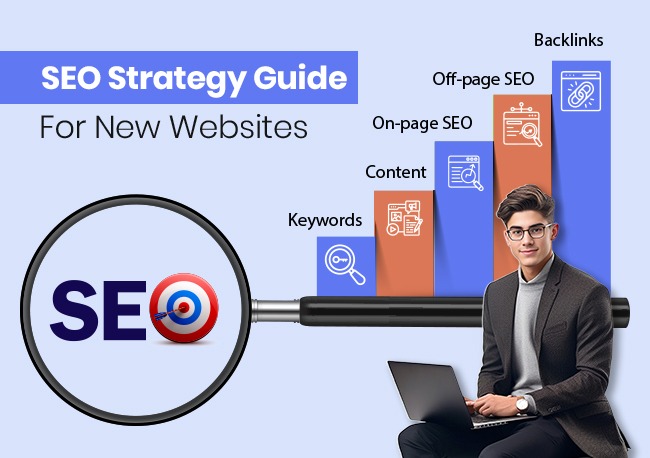
Follow these nine steps in order, and you’ll have a stronger SEO foundation than most established sites that have been online for years.
➢ Step 1: Niche Selection & Topical Authority
The most common mistake new sites make is trying to cover too much too soon. “I’ll start a marketing blog” isn’t a strategy. I’ll be the best resource for cold email outreach for B2B startups is a good one to get started.
What to do? Topical authority is the idea that Google rewards sites that go deep on a specific subject over sites that touch everything lightly. A site with 40 thorough articles all about email marketing will consistently outrank a site with one good email marketing article and 39 articles about random other things.Build it with a hub-and-spoke structure: one comprehensive pillar page covering a topic broadly, linked to 10–15 cluster articles each covering a specific subtopic in depth. Everything connects. Over time, Google recognizes the pattern and starts treating you as an authority in that space.
➢ Step 2: Smart Keyword Strategy (Beyond Traditional Research)
Most people pick keywords based on search volume alone. That’s a mistake.
A keyword with 10,000 monthly searches means nothing if the top results are all from major brands with years of authority behind them. A keyword with 500 monthly searches that you can actually rank for, that brings in people ready to buy, is worth ten times as much.
What to do? 92% of keywords have fewer than 10 monthly searches per month. The sweet spot for new sites is specific, long-tail queries, the kind that show exactly what someone wants and where your chances of ranking are actually realistic.
Expert Tip: One of our favorite research tactics for new sites is question mining. Go through People Also Ask boxes, AnswerThePublic, Reddit, and Quora. Find the exact questions your audience is already asking. Write clear, thorough answers. These long-tail question queries are much easier for new sites to rank for.
Also Read: An In-Depth Guide On Fresh Keywords
➢ Step 3: Content That Actually Ranks in 2026
Google’s systems have gotten very good at identifying content that’s genuinely helpful versus content that’s just filling space. In 2026, low-effort content gets filtered. The good news is that if you’re willing to put in real work, the bar isn’t hard to clear; most of your competitors aren’t.The framework Google uses to evaluate quality is called E-E-A-T: Experience, Expertise, Authoritativeness, and Trustworthiness.
- Experience means you’ve actually done what you’re writing about. Share real examples, specific results, and first-hand observations.
- Expertise means command of the subject, correct terminology, cited research, and depth that only comes from actually knowing the topic.
- Authoritativeness builds over time through backlinks, mentions, and a consistent track record.
- Trustworthiness comes from basics: HTTPS, clear authorship, contact information, and honest disclosures.
If you’re thinking of using AI for content, here’s what you should know about: Using it to help draft, outline, or research is completely fine. Publishing raw AI output with no original perspective, no real examples, and no human editing is what gets you filtered.
If your content looks and reads identically to a hundred other AI-generated articles on the same topic, Google will treat it that way. Add your voice. Add your experience. That’s the moat.
Also Read: How to Write Website Content Using ChatGPT?
➢ Step 4: On-Page SEO That Still Moves Rankings
- ★ Title Tags — Keep them under 60 characters. Put the main keyword near the start. Make it clear why someone should click. Monitor your CTR in Search Console. If a page is getting impressions but few clicks, the title is the first thing to fix.
- ★ Meta Descriptions — These don’t directly affect rankings, but they absolutely affect clicks. Under 155 characters, include your keyword (Google bolds matching terms in results), lead with the benefit, and end with a reason to click.
- ★ Headers — One H1 per page with your main keyword. Three to six H2s covering major sections. H3s for anything that needs breaking down further. A clear header hierarchy helps both readers and Google understand what your page is actually about.
- ★ URLs — Short, descriptive, keyword-containing. yoursite.com/keyword-research-guide/ beats yoursite.com/p=1234 in every way. Hyphens between words, all lowercase, no unnecessary dates or parameters.
- ★ Internal Links — One of the most underused tactics in SEO. Link related pages to each other using descriptive anchor text, not “click here” but actual descriptions of what the linked page covers. This distributes authority around your site, helps Google map your topic structure, and keeps visitors for long.
- ★ Schema Markup — At minimum, add Organization and Website schema to your homepage, Article schema to blog posts, and FAQ schema to any page with question-and-answer sections. Structured data helps Google understand context and can earn rich results that stand out in the SERPs.
➢ Step 5: Technical SEO (Non-Negotiable Foundation)
Broken technical SEO is silent. Your content might be excellent, your backlinks growing, your titles compelling, and a technical issue you don’t even know about can still prevent you from ranking. Get this right early.
- ★ Site Architecture — Keep important pages within 3 clicks of the homepage. Structure your site logically with clear parent-child relationships. As you add more content, regularly check for orphan pages, pages with no internal links pointing to them, which rarely rank.
- ★ Core Web Vitals — Google’s three-page experience metrics are confirmed ranking factors.
The targets are:
- LCP(Largest Contentful Paint (LCP) measures loading speed) should be under 2.5 seconds,
- INP(Interaction to Next Paint (INP) measures responsiveness and should be under 200 milliseconds, and
- CLS(Cumulative Layout Shift (CLS) measures visual stability) should be under 0.1.
Right now, over 50% of websites fail to meet all three thresholds simultaneously. And, your hosting infrastructure is the foundation of all of this. So, make sure to get the best hosting for a strong digital foundation.
- ★ Mobile-First Indexing — Google uses mobile-first indexing for 100% of new websites. The mobile version of your site is what gets evaluated and ranked. Use responsive design, 16px minimum font size, touch-friendly tap targets, and make sure all your content is visible on mobile, not hidden behind expandable sections.
- ★ HTTPS — Non-negotiable. If you’re still on HTTP, fix it today.
- ★ Canonical Tags — Prevent duplicate content issues from URL variations and tracking parameters. Every page should have a self-referencing canonical tag at a minimum.
Also Read: What Makes a Good Website Checklist? A Complete Guide
➢ Step 6: Link Building in 2026 (Quality > Quantity)
Backlinks are still one of Google’s top three ranking signals. A link from another website is a vote of confidence, and Google still uses them heavily to determine which sites deserve authority. But the rules have tightened. Low-quality links don’t just stop working; they can actively damage your site’s reputation.
- ★ Strategic Guest Posting — Find 10–15 genuinely relevant sites with real traffic and editorial standards. Pitch-specific, valuable content ideas tailored to their audience. Place your links naturally within the body of the content, and use branded or topical anchor text rather than exact-match keywords.
- ★ Digital PR — Create something worth citing: original data, a study, a survey, a unique framework. Pitch it to journalists and industry publications. A single editorial link from a high-authority domain is worth more than dozens of guest posts on low-traffic sites.
- ★ Broken Link Building — Find broken links on relevant sites and offer your content as a replacement. Tools like Ahrefs or the Check My Links browser extension make finding these simple.
- ★ Community Participation — This is the slow burn that actually works long-term. Show up in Reddit threads, Slack groups, niche forums, and Quora. Answer questions thoroughly. Share real insights. Links follow reputation, and reputation is built by being genuinely helpful over time.
What to avoid: PBN links, paid link schemes, mass directory submissions, and link swaps at scale. Google’s spam detection catches these. Build slowly and keep things clean.
➢ Step 7: User Experience & Behavioral SEO
Google pays attention to how people behave when they land on your pages. A page that people leave immediately after arriving tells Google the content didn’t deliver. A page people spend five minutes on and click through from tells a completely different story.
Improve dwell time by answering the question the searcher came for early in the piece; don’t make them dig for it. Hook them in the first paragraph. Use a table of contents on long content so people can jump to what they need.
Reduce bounce rate by matching search intent precisely. If someone searched for a comparison and you gave them a tutorial, they’ll leave. Fast load times matter here, too. Sites meeting Core Web Vitals thresholds see a 24% reduction in page abandonment, improve user experience, and reduce bounce rates.
Improve pages per session through strategic internal links that guide readers to the next logical piece of content. A reader who visits three pages instead of one is a strong behavioral signal that your site offers real value.
➢ Step 8: Tracking, Analytics & SEO KPIs
You can’t improve what you don’t measure. Here’s what we actually track and how often:
- ★ Weekly: Keyword ranking changes in Search Console, CTR by page (flag anything with over 1,000 impressions and under 2% CTR), indexing errors, crawl anomalies.
- ★ Monthly: Organic traffic growth, new referring domains, CTR & conversion rate by landing page, Core Web Vitals scores, and domain authority trend.
- ★ Quarterly: Full technical audit, backlink profile review, content performance audit, which posts are growing, which are declining, and which need refreshing.
➢ Step 9: Content Distribution & Visibility
Publishing and waiting is a slow game. Amplify each piece from day one.
- Share new content in communities where you’ve genuinely contributed, such as Reddit, LinkedIn groups, and niche Slack channels. Don’t spam; share when it’s actually relevant.
- Repurpose key insights into social posts or short-form video.
- Build an email list from month one. Even a small email list of genuinely interested subscribers who read and click through your content sends positive engagement signals to Google.
- Every time you publish something new, go back and link to it from 2–3 existing relevant articles. This gets it crawled faster and passes authority from your established pages to the new one.
Also Read: How Can You Make A Website Look More Professional?
Common SEO Mistakes in 2026 & What You Should Do?
- ★ Publishing AI Spam Content — Mass-producing AI articles without editing, adding real examples, or bringing any original perspective is the fastest way to get your site filtered by Google’s quality systems. Use AI as a tool. Don’t let it be your entire strategy.
- ★ Ignoring Search Intent — Writing perfectly optimized content for the wrong intent is wasted effort. If someone searches “best project management tools,” they want a comparison list, not an explainer on what project management is. Read the SERP before you write anything.
- ★ Over-Optimizing Keywords — Cramming your target keyword into every paragraph, using identical anchor text for every internal link, forcing keywords where they don’t fit naturally, Google catches all of this. Write for people first. The optimization is about clarity, not repetition.
- ★ No Internal Linking Strategy — Most new sites publish content in isolation. No links between related posts, no structure. The result is a pile of disconnected pages that share no authority and give Google no clear picture of what your site is about. Connect everything deliberately.
- ★ Expecting Instant Results — This is the one that kills most new SEO efforts. Someone publishes ten articles, checks rankings after three weeks, sees nothing, and gives up. New sites typically start seeing meaningful organic traffic between months three and six.
The compounding nature of SEO means most of the growth arrives later. Trust the process.
How to Use AI Responsibly?
AI tools have genuinely changed what’s possible in SEO. Used well, they save hours on repetitive work and let you focus on what actually requires human judgment.
But the distinction matters more in 2026 than ever before. AI-generated content is everywhere, which means truly original, experience-driven content stands out more than it ever has.
Here’s how to use AI as an advantage without letting it become a liability.
★ AI for Outlines, Not Blind Publishing
The smartest way to use AI in your content workflow is as a starting point, not a finish line. Use it to generate content outlines, identify angles you might have missed, and speed up first drafts. Then rewrite heavily, add your own examples, real data, first-hand experience, and a perspective that no AI can replicate.
If your published content is unique from a hundred other AI-generated articles on the same topic, Google will treat it exactly that way.
★ Competitor Gap Analysis
AI tools can process and analyze competitor content at a scale that would take hours manually. Feed in your top competitors and ask it to identify content gaps, topics they cover that you don’t, questions their articles fail to fully answer, and angles they’ve consistently missed.
This kind of SEO competitor analysis turns what used to be a full day’s research into a 20-minute task, and gives you a clear, prioritized list of content opportunities to go after.
★ SERP Pattern Analysis
Before writing any new piece of content, use AI to analyze the top-ranking pages for your target keyword. What content formats dominate? What questions do all the top results answer? What do they all leave out? Understanding SERP patterns before you write means your content is built to fill gaps rather than just add to the noise.
★ Automated Technical Audits
AI-assisted SEO tools can scan your entire site and surface technical issues faster than any manual review, flagging Core Web Vitals failures, missing schema markup, duplicate content, broken internal links, crawl errors, and thin content all in one pass. Use them as a first-pass audit before you dig into fixes manually. The principle is simple: use AI for the repeatable tasks and keep humans in charge of the original and experiential. The content that ranks in 2026 has something AI alone can’t generate: genuine expertise, real perspective, and actual experience.
Also Read: Do Websites Go Away with AI Agents – Know the Truth
Conclusion
SEO isn’t as complicated as it’s made out to be. At its core, it’s just this: build something worth finding, make it easy for Google to understand, and give people a genuine reason to stay.
The fundamentals haven’t changed. What’s changed is the bar. Google expects better content, faster sites, and clearer expertise than it did even two years ago.
But have patience, because you won’t see results overnight. Wait for three to six months to get real traction and six to twelve before it feels like momentum. But organic traffic compounds in a way paid ads never do. Every article that ranks keeps working. Every backlink earned keeps passing authority. The effort you put in today pays off for years.
And before any of that SEO work can do its job, your site needs a solid foundation, a fast server, reliable hosting and a domain that represents your brand well. These feel like small decisions at the start, but slow hosting quietly drags down your Core Web Vitals, your crawl efficiency, and your user experience before a visitor has read a single word.
If you’re still sorting that out, check out Host IT Smart hosting, domains, and servers.
As your traffic grows, shared resources can hold you back.Upgrade to VPS Hosting for greater speed, stability, and control.
Frequently Asked Questions
1. How long does SEO take to show results?
For most new websites, you’ll start seeing impressions in Search Console within 4–6 weeks. Meaningful organic traffic typically comes between months three and six. Competitive keywords often take 6–12 months. The timeline depends on your niche, content quality, and how actively you’re building authority.
2. What are the best free tools to start with?
Google Search Console (non-negotiable), Google Analytics 4, Google PageSpeed Insights, Bing Webmaster Tools, Ahrefs Webmaster Tools (free tier), Screaming Frog (free up to 500 URLs), and Google’s Rich Results Test for schema validation.
When you’re ready to invest, use Ahrefs or SEMrush for full keyword and backlink research, and Surfer SEO or Clearscope for content optimization.
3. Does publishing more content faster help rankings?
Only if the quality stays high. Publishing 10 thorough, well-optimized articles will outperform 50 thin ones every time. Google’s Helpful Content System actively filters low-effort content, so volume without quality can actually hurt you.
Focus on covering fewer topics really well rather than flooding your site with mediocre posts.
4. Is it worth doing SEO if we’re also running paid ads?
Absolutely, and the two work well together. Paid ads give you immediate visibility while SEO builds long-term organic traffic. The practical benefit of running both is that your paid ad data, which keywords convert, which headlines get clicks, gives you real intelligence to guide your SEO content strategy.
Over time, as your organic rankings grow, you can reduce ad spend on keywords you’re already ranking for organically.
5. Someone told us backlinks don’t matter anymore. Is that true?
No. Backlinks are still one of Google’s top three ranking factors. What’s changed is that quality matters far more than quantity. Ten editorial links from genuinely relevant, authoritative sites will do more than 500 links from random directories.
6. What’s the single most impactful thing a new website can do for SEO right now?
Pick one narrow topic and become the most comprehensive resource for it on the internet. Not the biggest site, not the most backlinks, just the most genuinely useful, thorough, well-organized resource on that specific subject. That’s topical authority in practice, and it’s the fastest legitimate path from zero to ranking for a new site in 2026.