| Getting your Trinity Audio player ready... |
A quick question: How often do you leverage the power of the internet to seek information or surf for a product, service, or business?
According to a mind blowing insight shared by Semrush, around 5.9 million people worldwide search on Google every minute. From discovering trending videos to keeping up with celebrity buzz to shopping for daily essentials to grabbing exclusive makeup collections from top brands, every query is rolled out with a single click.
Just envision how one medium holds remarkable potential to elevate your presence in your industry, especially if you have a website. Whether you are in the hospitality, retail, entertainment, or real estate industry, having a website is no longer an “option” — it’s a necessity to not only survive but also to stay relevant, enhance your digital footprint, and so much more.
So, if you haven’t taken a leap of faith in the digital world, trust us, you are missing out on a treasure trove of benefits. It’s never too late to take an action. Before you jump straight to website development, let’s explore how websites can pave the path to success for your business in your industry.
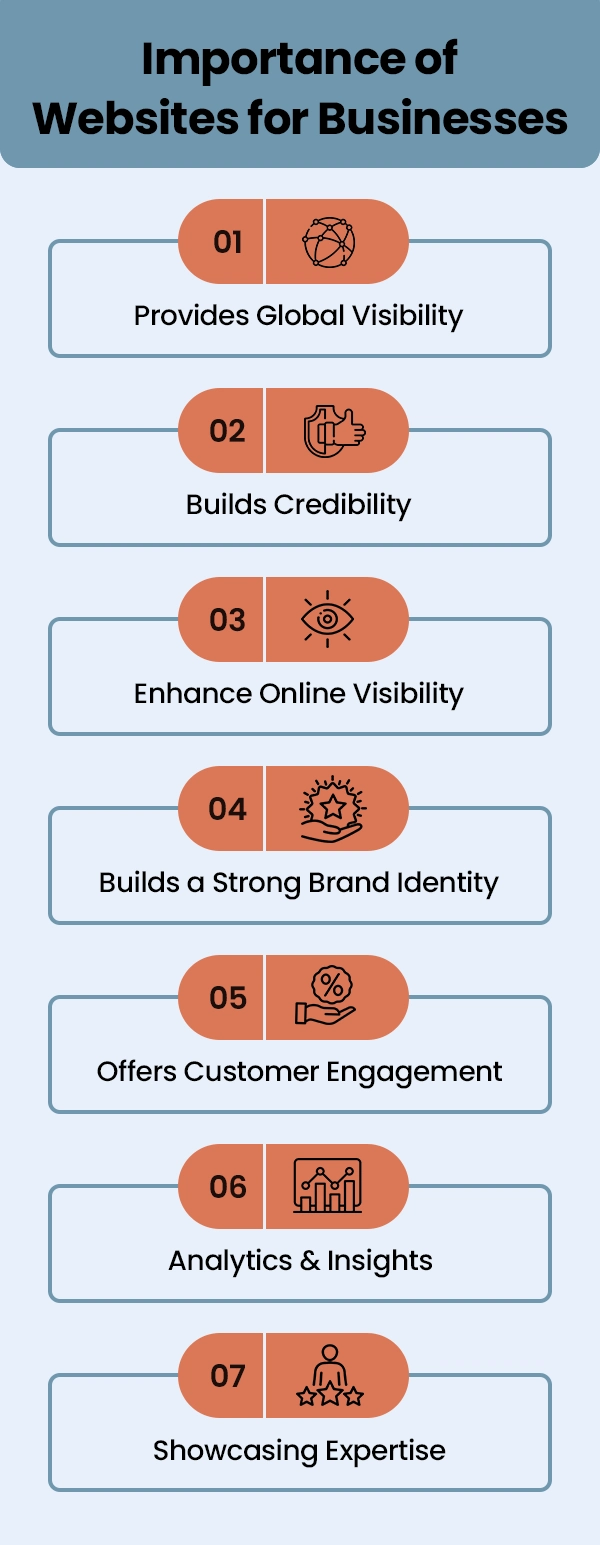
Importance of Websites for Businesses
1. Global Visibility
Imagine this: You have established a strong foothold for your skincare and makeup business in your vicinity, where you sell self-formulated and manufactured as well as renowned products from leading brands. You attract 100-200 footfalls every day, earning substantial revenue that helps you sustain among your competitors.
But is that all your business deserves? No, right! Your passionate entrepreneurship needs growth, scalability, & brand recognition, and one way to go about it is the website! Website development unlocks the opportunity to reach out to a broader range of audience.
You can create a professional website highlighting your range of products and promoting it to your target audience, which will help you make 2x more money than you would be currently earning by selling within your area. Moreover, this will help you beat the competition and stand out in your industry.
Also Read: What Is A Website Name?
2. Builds Credibility
Zig Ziglar once said, “If people like you, they will listen to you. But if they trust you, they will do business with you,” and we couldn’t agree more. Credibility is one of the most important signs of a successful business in an industry, and having a website helps you build that.
A business with a well-designed website demonstrates a professional presence. Services, products, seamless navigation, social proof, and contact details confirm a business’s legitimacy and reliability.
In fact, it simultaneously empowers the formation of a brand’s identity, which we will explain in detail in our fourth point. All in all, the website stands as a testament to credibility.
Also Read: What Are The Benefits Of A Website For Small Businesses
3. Enhance Online Visibility
Did you know 68% of men and 72% of women prefer digital platforms for shopping, seeking academic resources, purchasing medicines, electrical gadgets, household goods, booking tickets, and making reservations, claims OptinMonster? In today’s fast-paced world, where everyone’s needs have changed, upgrading your business model is a must to stay relevant in your industry among your target audience.
When we suggest changing your business model, it does not mean abandoning your traditional practices; it means incorporating modern methods to help your target audience find you instantly.
Of course, you will need to implement the right SEO practices, but this first step can boost your visibility, encouraging visitors to engage with your business and offerings.
Also Read: Difference Between Target Audience And Target Market
4. Builds a Strong Brand Identity
Establishing a business is relatively easy, but transforming it into a brand can be a tough nut to crack. You can acquire a considerable number of customers and establish your presence among the local community. But truth be told, this won’t be enough to build a brand.
Much like in real life, you will need a virtual storefront to lay the foundation of your brand digitally, and what better way to do that than website development?
A website can contribute to cohesiveness, from logo to brand colors to messaging to showcasing your mission and values; you maintain consistency across all the pages of the website and other linked platforms, leaving a lasting impression on your visitors.
Furthermore, the information on your website, your round-the-clock services, and the offerings you market indirectly help build your brand.
Also Read: Brand Strategy Vs Marketing Strategy – Know The Difference
5. Offers Customer Engagement
“Every company’s greatest assets are its customers because without customers there is no company.” — Michael Leboeuf.
This quote is the perfect representation of customer engagement. We all understand the importance of customers, but the biggest concern is how do we keep them engaged.
Customer engagement is beyond the give and take relationship. Today, you need to foster loyalty & lasting relationships and offer a memorable experience to keep them coming back for more. While there are multiple ways to showcase your efforts, including social media, email marketing, and offers & deals, the website is one of the sure shot ways to nurture customer engagement.
Every customer seeks detailed, up-to-date information on a website; if it offers what they are looking for, the likelihood of abandoning the site decreases and the likelihood of returning and taking the desired action increases. The seamless usability, including intuitive touchpoints, lag-free scrolling, and an appealing layout with captivating visuals, color themes, and more, creates an interactive experience.
The integration of social proof and consistent customer service also plays a pivotal role in customer engagement. A website with a social media feed showcases the interesting side of your business, leading to increased interaction on the site. In addition, there is a high chance of gaining more followers on your social media accounts.
Offering constant customer support by uploading FAQs on your website, providing troubleshooting guidance, and integrating a 24*7 chatbot for assistance with common inquiries & major issues not only puts them at ease but also makes them feel valued, keeping them hooked to your business.
Also Read: 11 Benefits Of Email Marketing For Small Businesses
6. Analytics & Insights
Many business owners assume that setting up a business and generating revenue equate to growth. However, they often overlook the “performance insights” aspect, which helps measure their progress and focus on key areas for improvement.
Monitoring performance reports on a frequent basis indicates the overall interaction of a user on your website. You can track the number of clicks, average visits, and time spent on a page, how your users interact with the layout, do they find it effortless to use, the total number of visitors, demographics, and similar other factors that can help in prioritizing your goals, improve user experience, revamp your campaigns (if required), and ultimately achieve long term success.
There are numerous third-party SEO tools, such as Semrush and Ahrefs, that can be used to track your website. But if you are looking for a free option, utilizing Google Analytics and Google Search Console would be a great alternative.
Also Read: 15 Best SEO Audit Tools For Your Website (Free+Paid)
7. Showcasing Expertise
You might have extensive knowledge of your business and a fantastic model, but if you don’t have the right platform to showcase it effectively, you may never have the chance to familiarize your target audience with your spectacular offerings and unique value proposition.
This is when a website comes into the picture!
Developing a website enables you to share your mission, vision, and products/services with potential customers through visuals and content. Besides this, uploading positive testimonials & reviews and creating a resource center page are two other wonderful ways to boast about your expertise.
This was all about the seven advantages of using a website for your business. Moving forward, we will discuss which businesses need the website to flourish in their sector.
Also Read: What Makes A Good Website Checklist? A Complete Guide
Industries that Need Websites the Most
When discussing why businesses need websites, the answer is simple: almost every growing industry. From startups to enterprises, and especially small businesses needing websites, a strong digital presence is no longer optional; it is foundational.
Below is a refined, detailed list of businesses that most need websites, along with why they cannot afford to ignore this powerful tool.
1. Retail and eCommerce
The first and most apparent industry players that need websites are Retail and eCommerce. This is known to be one of the most booming industries where success majorly lies in keeping customers satisfied and enhancing their shopping experience.
However, how would one do that in this ever changing landscape?
Simple! By developing a website.
Tidio says that over 2.14 billion people are gravitating towards online shopping. In the last five years, 40% of users have shifted their purchase patterns to online. That shift alone answers the question: what businesses need websites today? Retailers top the list.
But why online when we still have local stores and malls everywhere?
Digital shopping has become the new go-to because of convenience, 24/7 accessibility, irresistible discounts, global product access, quick delivery, secure payments, hassle-free returns, and personalized recommendations.
Whether you are:
- An online retailer
- A brick-and-mortar store
- A specialty shop
- A dropshipping business
- A wholesale distributor
- Or running an auction platform
Having a website is not just beneficial; it is essential for expansion, scalability, and customer retention.
If you are an online retailer, brick-and-mortar store, specialty shop, service-based, dropshipping, & wholesale business, or have an auction site, having a website is a must for you.
Also Read: Will ECommerce Dominate Physical Stores – What’s The Future?
2. Hospitality and Tourism
Earlier, the hospitality and tourism industry depended on word of mouth, brochures, print ads, and fellow travel agents, but now technology, especially websites, is the main hero of these industries.
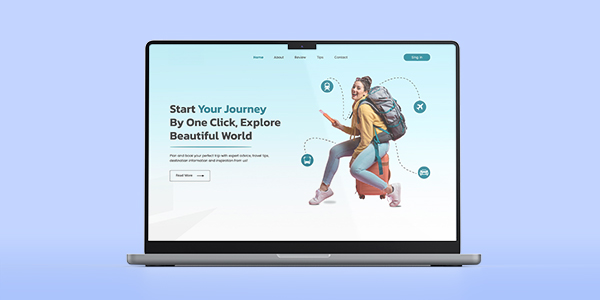
From searching for flight tickets to checking out the amenities of a hotel for making a reservation to communicating over emails and WhatsApp for a query, everything can be carried out through the means of a website.
Hotels, resorts, travel agencies, airlines, tour operators, car rental services, and travel bloggers all fall under the list of businesses that need websites because:
- Customers expect instant bookings
- Reviews influence decisions
- Global visibility matters
- Accessibility builds trust
A website does more than display services; it builds credibility. Positive reviews, testimonials, and detailed information elevate the customer journey and encourage confident decision-making.
Also Read: How To Start Your Travel Website?
3. Food & Catering Services
We have all heard of food delivery apps such as Zomato, Swiggy, Uber Eats, GrubHub, FoodPanda, and many more. Today, most restaurants, cafes, and catering services are registered with such food delivery apps.
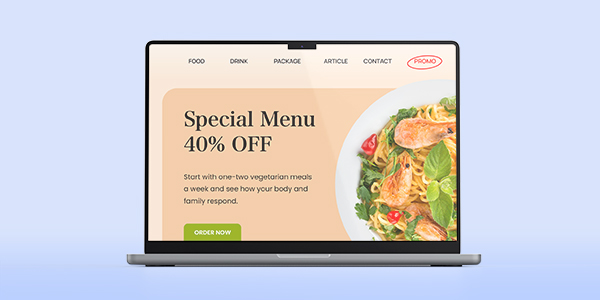
But what if they want to go beyond the obvious?
Well, a website can help with that!
If you own a catering company planning expansion across cities, a website allows you to showcase menus, packages, pricing, availability, and event portfolios all without paying recurring commission fees to third-party platforms.
There are amazing digital marketing strategies for catering businesses that you can apply to your business.
- Target a broader audience
- Build direct customer relationships
- Strengthen brand recognition
- Increase revenue margins
- Control their marketing narrative
Restaurants, cafés, bakeries, food trucks, and catering contractors all benefit immensely from having a dedicated website that converts visitors into direct bookings.
Also Read: How To Create A Restaurant Website: 6 Steps You Must Know
4. Construction And Real Estate Industry
Construction and real estate are the two of the fastest growing industries globally. In a blog post by One Nine Elms, they even stated that there are around 100 billion buildings in the world.
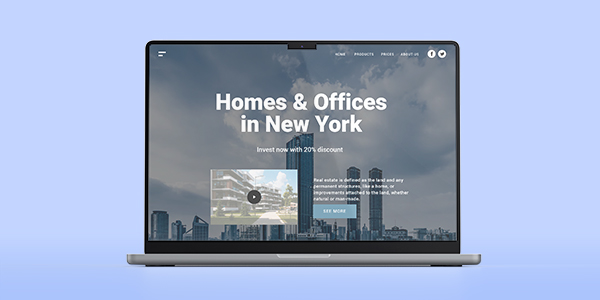
Developers, real estate agents, contractors, and property consultants must leverage technology to stay relevant.
A website enables you to:
- Display property portfolios
- Highlight ongoing and completed projects
- Provide virtual tours
- Generate qualified leads
- Track market trends
- Build authority in a competitive space
In an industry where trust and presentation determine sales, a website acts as a digital showroom. It bridges communication between buyers, sellers, and developers while expanding brand visibility beyond geographical limitations.
If you are part of this sector, adapting to innovative technology like websites is no longer optional; it is strategic.
Also Read: How To Set A Budget For Your Business Website Development
5. Health and Wellness
The health and wellness industry has evolved significantly, not only in treatments but also in communication methods.
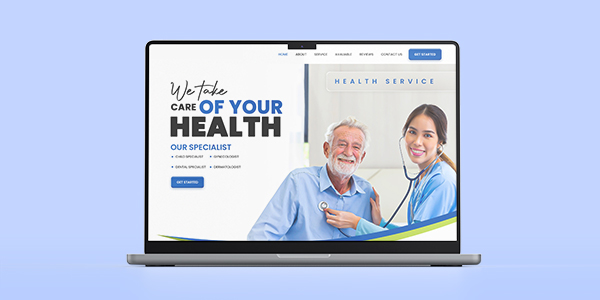
Previously, consultations required in-person visits or phone calls. Today, telemedicine platforms and health websites have streamlined the process.
Clinics, hospitals, therapists, fitness trainers, nutritionists, and wellness coaches are prime examples of businesses that need websites today.
A modern website allows them to:
- Offer online appointment booking
- Share treatment information
- Maintain digital records securely
- Enable teleconsultations
- Build patient trust
Security and confidentiality remain paramount in this industry. Advanced website technologies ensure that patient data is protected while maintaining accessibility and efficiency.
Also Read: Cheapest Way To Start A Website
6. Professional Services
Salon, legal, tax, consulting, financial, engineering, architectural, human resources, marketing, advertising, educational, and training services are the key businesses that comprise the diverse landscape of professional services.
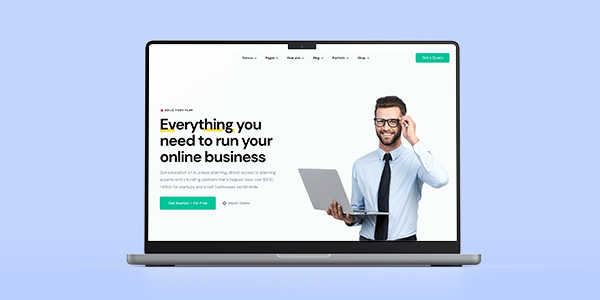
The larger part of this industry has rooted itself in its locale, but they fail to realize its immense potential, and a website can help it unleash it.
Imagine a profitable salon attracting steady local customers. But when you impose a website, you basically broaden your scope.
Now imagine expanding visibility to brides, influencers, corporate clients, and event attendees through a website. You can even open a branch if there is a constant response from the location.
For small businesses needing websites, professional services benefit through:
- Increased visibility
- Enhanced credibility
- Online bookings
- Portfolio display
- Lead generation
- Marketing integration
A website transforms a localized service provider into a brand with reach.
Also Read: 9 Popular Types Of Websites
7. Entertainment
The entertainment industry thrives on engagement, promotion, and audience interaction. From OTT releases to music launches and event promotions, digital platforms dominate this space. Websites remain the backbone of structured promotion.
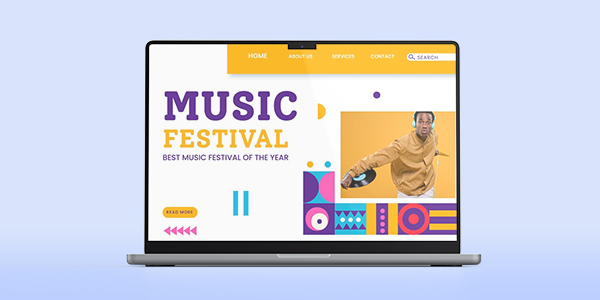
Amidst this dynamic sector, one tool that has remained perpetual throughout the years is the website. Whether it’s marketing a TV show, movie, music album, game & event, or introducing the new face of a brand, all require websites to:
- Announce updates
- Promote releases
- Sell tickets
- Strengthen brand identity
- Track user interaction
It also serves as a perfect source for breaking the news, reinforcing brand identity, and tracking user behavior and interactions.
8. Technology and Software
Businesses without websites in the technology and software industry are like cars without engines. A car may have a sleek, appealing exterior, but its interior lacks the power to navigate the digital domain. It’s almost redundant to explain the benefits you will get from using a website, but letus outline the key aspects.
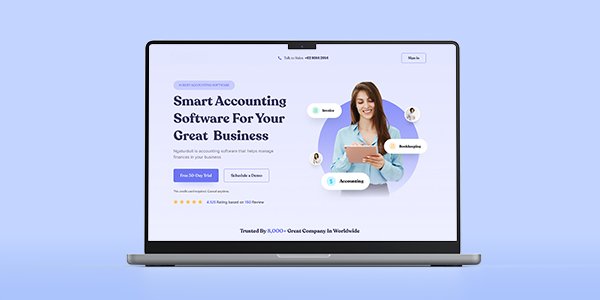
A website allows tech companies to:
- Showcase products and solutions
- Share company vision and values
- Publish product updates
- Launch new services
- Strengthen cybersecurity infrastructure
- Build investor and customer confidence
Software development firms, IT consultancies, startups, SaaS providers, and digital agencies must maintain an authoritative digital presence to stay competitive.
In an industry where first impressions matter, a professionally developed website is a powerful differentiator.
Also Read: Bought A Domain Name. Now What?
Challenges and Solutions in Establishing & Maintaining Websites
❖ Challenge #1: If your developer lacks the expertise and capabilities to create a website that meets your needs, it can hamper the overall development cycle, including extending the timeline, increasing development costs, and hiring additional resources.
★ Solution: To avoid such challenges, we recommend conducting an extensive background check on the developer, including years of experience, reviewing their portfolio, and asking about the process and whether they have worked on similar projects, to assess their competency. Make sure not to rush the process, and search for a variety of options before ruling out any.
❖ Challenge #2: Budget constraints can be one of the biggest stumbling blocks on the journey to website development, especially for startups.
★ Solution: We understand that investing your hard-earned money can be influenced by emotional factors such as anxiety about losing it all or missing out on profits. Do not feel intimidated by such hurdles. Instead, focus on finding cost-effective options and making your website one of a kind with powerful, intuitive features, functionality, layout, hosting, and domain registration.
❖ Challenge #3: Weak websites are vulnerable to hacking, malware attacks, and data breaches.
★ Solution: Layer your website with SSL certificates, firewalls, and security plugins. Do not overlook timely software and security updates, as they will help your website withstand potential threats.
❖ Challenge #4: Website owners who fail to consider their long-term needs may face scalability issues. In the worst-case scenario, they might have to develop a website from scratch again.
★ Solution: No website owner wants their efforts to go in vain; therefore, it is advisable to state your goals clearly from the start to ensure the website is adaptable to growing demands. Always choose a flexible hosting solution that can handle traffic, data, and functionality, and meet your requirements for upcoming endeavors.
❖ Challenge #5: Maintaining and updating content over time on a large website can be pretty difficult.
★ Solution: Under such circumstances, we recommend leveraging CMS (Content Management Systems) such as WordPress, Joomla, and Drupal, as they are specifically designed to simplify content-related tasks.
To make your workflow easier, create content calendars, distribute tasks efficiently among team members, and develop a roadmap with timelines for content updates.
❖ Challenge #6: A complex layout can lead to site abandonment, thereby drastically reducing the traffic.
★ Solution: A happy customer equates to a growing business in terms of traffic, revenue, and brand recognition. This is why it’s crucial for you to conduct thorough research on your users and design your website accordingly. It should be responsive across all browsers and devices, easy to navigate, have clear, concise, & compelling CTAs, and maintain a well-structured layout.
❖ Challenge #7: A low ranking of your website results in less business and little to no awareness.
★ Solution: Optimize pages, visuals, and meta tags using the right SEO practices, and create high-quality content that offers the exact solution your target audience seeks. Generate backlinks from authoritative sites and track analytics to measure your performance.
❖ Challenge #8: Disregarding or forgetting to update plugins, features, and other website maintenance tasks can reduce your website’s turnaround time, making it vulnerable to unwanted attacks and requiring more frequent content updates.
★ Solution: Your website should always stay up to date with the latest versions. You can create a schedule to update plugins and software and apply security patches regularly. Fix the broken links in your content and refresh it to ensure it remains relevant and accurate.
Parting Thoughts
A website isn’t just a digital brochure anymore; it’s a business’s growth engine, trust signal, and most scalable marketing asset. Whether you’re a startup, freelancer, or enterprise, skipping your own site means missing out on visibility, leads, and revenue.
So far, we have covered the importance of websites across industries, the key players in the sector who need them, the challenges of the website development process, and a practical approach to overcoming these obstacles.
As you march toward development, remember that the journey can be overwhelming and time-consuming, but embrace the process, and the end result will be as amazing as the success you will achieve in the future.
Frequently Asked Questions
Here are the top 10 most popular websites in 2024:
➔ Business Websites
➔ eCommerce Websites
➔ Blogging Websites
➔ Portfolio Websites
➔ Membership Website
➔ Nonprofit Website
➔ News Websites
➔ Social Media Websites
➔ Educational Websites
➔ Health & Wellness Websites
Regardless of a business’s size or specialty, having a website is essential in today’s world to establish a virtual presence, reach the target audience, generate revenue, promote services, and grow the business from the outset.
Usually, the overall cost of website development can be –
➢ Website – INR 50,000 to 1,00,000 (the cost may vary depending on your needs and size of the project)
➢ Domain Name – INR 500 to 2,000
➢ Web Hosting – INR 150 to 25,000
➢ Theme or Template – INR 0 to 5,000
➢ Professional Web Design – INR 5,000 to 35,000
➢ DIY Website Builder – INR 5,000 to 40,000
➢ SSL Certificate – INR 0 to 20,000
Nothing is fully replacing websites anytime soon. Social media, apps, and marketplaces are growing fast, but websites remain the only digital space you truly own and control. Platforms may change, but your website stays.
Yes, more than ever. A website builds credibility, improves search visibility, and gives customers a central place to learn about your business. Without one, you risk looking less professional or harder to trust.
You can use social media pages, online marketplaces, or business listing platforms. However, these are rented spaces. They help with visibility but don’t offer full control, branding freedom, or long-term stability like a website does.
Yes, technically you can, especially in the early stages. But growth becomes limited. Without a website, you depend completely on third-party platforms, referrals, or offline reach, which can restrict scalability.
Ideally, both. Social media helps you attract attention and engage with your audience. A website converts that attention into leads, bookings, and sales. Social media is the conversation, our website is the foundation.
Modern business websites aren’t just static pages anymore, they’re experience engines:
➔ AI chatbots and dynamic content serve visitors based on their behaviour and intent increase personalization and smart support.
➔ With more users on mobile, responsive design is non-negotiable.
➔ SSL, secure authentication, and data protection build credibility and trust online.
➔ Optimizing for Google search and voice queries increases discoverability and the use of structured content.