Highlights
- Google processes over 16.4 billion searches every single day, and the businesses not showing up in those results are handing customers to competitors who are.
- SEO leads close at a 14.6% conversion rate, compared to just 1.7% for cold calls, direct mail, and traditional outbound. That’s not a gap. That’s a different game entirely.
- AI Overviews, ChatGPT, and Perplexity have changed how people find information, but Google still sends 345x more traffic than all AI platforms combined. SEO isn’t dying. It’s evolving.
- The biggest shift in 2026 isn’t the algorithm. It’s buyer behavior. They now research entirely through search before making contact; the business showing up during that research phase wins before the conversation even starts.
- The fastest SEO strategy in the world underperforms on a slow, unreliable website. Technical infrastructure isn’t an afterthought in 2026; it’s a ranking signal.
Introduction
Someone just Googled a problem your business solves. Did they find you or your competitor?
That one question is why SEO exists. And in 2026, it’s the question keeping a lot of business owners up at night.
Here’s what’s wild, though. There are entire industries, lawyers, dentists, contractors, and real estate agents spending thousands on billboards and Facebook ads, while completely ignoring the one channel where their customers are actively searching for them.
Not scrolling. Not getting interrupted. Searching. With intent. With their wallet out.
Why is SEO So Important for Some Industries?
SEO for those businesses isn’t a marketing tactic. It’s basically free leads on autopilot once it kicks in.
But not every industry gets the same results. A local roofing company and a national SaaS brand both do SEO, but the strategy, the payoff, and the urgency look completely different. Some niches are goldmines that are barely being touched. Others are so competitive that if you’re not already in the game, you’re already behind.
That’s exactly what this blog breaks down. For some of the best industries for seo, it’s the highest-ROI move they can make right now. If you’re a business owner trying to figure out whether SEO is worth it, or an SEO pro looking for the best niches to target in 2026, you’re in the right place.
Let’s get into it!
Question of the Year: Is SEO Still Relevant in 2026?
Every year, someone declares SEO dead. Every year, they’re wrong.
- Google now processes over 16.4 billion searches every single day. That number hasn’t dropped. If anything, the intent behind those searches has gotten sharper. People aren’t just browsing, they’re researching, comparing, and making purchase decisions directly from results.
- The traffic quality is also better than the volume. Even better than the volume. SEO leads close at a 14.6% conversion rate compared to just 1.7% for traditional outbound methods like cold calls, direct mail, or print ads. That’s not a small gap. That’s a completely different league.
- The median SEO ROI in 2026 sits at 748%, and businesses are seeing $22 back for every $1 invested. And that number climbs dramatically depending on the industry.
- The discoverability angle is just as strong. Google still sends 345x more traffic to websites than ChatGPT, Gemini, and Perplexity combined. AI search is growing, but it hasn’t come close to replacing Google as the primary discovery engine. Not even in the same ballpark.
Although this is a year of a lot of changes and evolutions as well.
Overviews, SGE, and zero-click searches have shaken things up. Studies show that click-through rates on informational queries have dropped as Google answers more questions directly on the results page. That’s real, and anyone telling you otherwise isn’t paying attention.
But, to appear in AI overviews, tools, and more, SEO is the key.
The point being, the SEO playbook has evolved. But the principle hasn’t: if people are searching for what you sell, you need to show up. Full stop.
Here’s something before we move forward on why it’s still relevant in 2026.
Large language models are highly reliant on up-to-date information from search engines to provide accurate answers. Therefore, one of the best ways to drive visibility from AI search is to be among the chosen results when LLMs use web search, and that boils down to having solid SEO, strong brand awareness, and a positive reputation.
Mark Williams-Cook, Director at Candour & Founder of AlsoAsked
Also Read: Click-through Rate (CTR) vs Conversion Rate: All You Need to Know
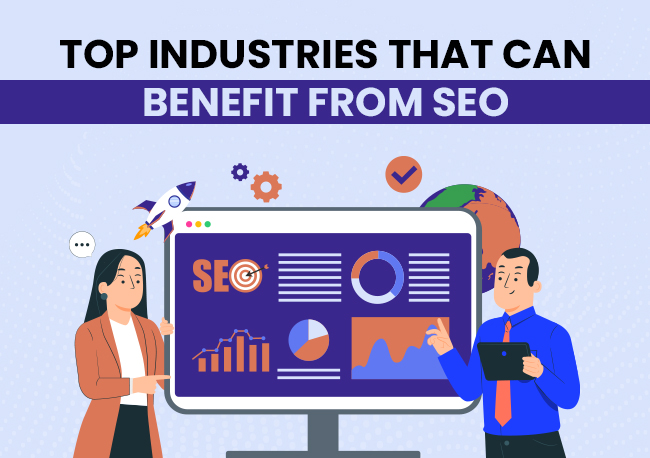
What Industries Need SEO the Most & Can Benefit the Most in 2026?
1. eCommerce & Online Retail
The brands winning in 2026 figured out one thing: organic search is the only acquisition channel that gets cheaper over time and will compound over time. This is possible with eCommerce SEO.
While everyone rents attention through ads, smart eCommerce brands are building an asset that compounds. And in a post-cookie, AI-driven search landscape, that asset is worth more than it’s ever been.
Why SEO for eCommerce?
➔ Google’s AI Overviews are now the first thing a buyer sees, and they’re pulling directly from well-structured product and category content. Brands that are not optimized are losing rankings & conversations.
➔ Search is now the primary product discovery channel for buyers, who’ve grown skeptical of paid social and influencer placements and actively trust organic results over anything that looks like an ad.
➔ With AI-powered comparison, buyers are making shortlists directly in the SERP. Brands without structured, comparable product data are being excluded before a buyer ever visits a site.
➔ The long-tail product search opportunity is enormous and largely untapped. Highly specific, high-intent queries have less competition and higher conversion rates than the broad terms most brands obsess over.
Tips to Do It Right:
➢ Optimize for AI Overview citations, structured, factual product content gets cited. Vague marketing copy doesn’t.
➢ Build category pages that answer the question behind the search to win both the ranking and the sale.
➢ Mine your internal site search data — what customers search on-site signals unmet demand your competitors don’t have access to.
➢ Create post-purchase content deliberately to establish authority and keep buyers in your ecosystem long after the transaction.
Also Read: Tips to Grow an eCommerce Business through Content Marketing
2. Healthcare & Wellness
Most practices are still acting like it’s 2015, relying on referrals while the entire patient acquisition journey has moved to search.
Patients today Google, compare providers, read reviews, and make a shortlist before ever making contact. The practice showing up with authority at that moment wins the patient. The one that doesn’t is invisible, regardless of how good the care actually is.
Why SEO for Healthcare?
➔ AI Overviews dominate health-related search more than any other vertical; practices without topical authority are being replaced by machine-generated answers entirely.
➔ Patients are now using ChatGPT and Perplexity to find providers, not just Google. Consistent, authoritative content across the web is the new referral network.
➔ E-E-A-T standards have permanently raised the floor for medical content; generic templated pages no longer rank. Physician-authored, clinically specific content is now the baseline requirement.
➔ Telehealth has expanded healthcare SEO beyond local geography; practices offering virtual services can now acquire patients regionally at a scale that simply didn’t exist before.
Tips to Do It Right
➢ Build clinical depth, not content volume; one authoritative physician-written page outranks ten generic blog posts every time.
➢ Treat your Google Business Profile as a primary patient touchpoint; most practices set it up once and never touch it again. That neglect is a competitive edge waiting to be claimed.
➢ Create condition-specific and procedure-specific pages; a single services page is not an SEO strategy.
➢ Own the post-diagnosis search moment, patients who have just received a diagnosis search immediately for answers. The practice showing up at that moment earns trust no ad can replicate.
Also Read: Does My Website Need a Blog – A Detailed Overview
3. Real Estate & Property
In 2026, buyers and sellers don’t just look up homes for sale anymore. They research neighborhoods, market trends, property comparisons, investment potential, and local lifestyle before ever contacting an agent.
And if your business shows up during that research phase. When someone repeatedly sees your insights while exploring neighborhoods, property prices, or buying guides, you’re no longer just another agent; you are a trusted voice.
Why SEO for Real Estate?
➔ AI-generated neighborhood summaries are replacing agent websites as the first buyer touchpoint. Those who don’t are removed from the journey at its most influential stage.
➔ Google Business Profile now outranks agent websites for local intent searches in most markets. It’s a primary lead generation asset, not a secondary listing.
➔ Neighborhood research searches have exploded, especially living in [city] and cost of living in [area] queries.
➔ Trust signals matter more than visibility, especially in YMYL-style categories like property investment and mortgages.
Tips to Do It Right
➢ Write neighborhood content only a local could write; lived-in specificity is the one thing national portals can never replicate at scale.
➢ Target decision-stage searches sellers actually make: Queries like “Should I sell my house in 2026,” “How long homes stay on market in [city],” or “cost of selling a house in [location]” drive seller leads before they ever contact an agent.
➢ Target the agent-selection moment — best agents in [neighborhood] are searched by someone who has already decided to transact. Owning it is as close to a guaranteed lead as SEO gets.
➢ Use hyperlocal insights competitors can’t replicate: Content about commute times, school zones, infrastructure projects, and upcoming developments creates unique authority signals AI models and search engines prefer over templated listing content.
Also Read: How to Make an SEO-Friendly Website?
4. Professional Services (Legal, Financial, Consulting)
Professional services live or die on trust. And in 2026, that trust often starts with a search. Someone facing a lawsuit, evaluating tax strategies, or looking for a consultant to fix a business problem doesn’t start by browsing ads. They start by asking questions.
And, if you are appearing as a solution to their problems, frequently asked questions, you have built trust and authority as a professional.
Why SEO for Professional Services?
➔ Most clients begin with problem-based searches, not firm names. And, SEO and credible content bridge that gap.
➔ AI Overviews are answering basic legal and financial questions directly, and firms whose expertise feeds those answers become the implicit authority recommendation when the prospect is ready to hire.
➔ Thought leadership content compounds uniquely in this industry; a well-written piece on a regulatory change builds credibility with both Google and prospective clients simultaneously.
Tips to Do It Right
➢ Build practice-area-specific pages with genuine depth; each specialization and client type deserves its own page written for the specific intent behind that search.
➢ Publish content around regulatory changes in real time. Prospects actively searching for guidance on something that just changed are the highest-intent visitors a professional services firm can capture.
➢ Optimize individual bio pages as standalone ranking assets; people hire people. A bio page optimized for [specialty] advisor in [city] converts at a dramatically higher rate than a generic firm page.
➢ Earn backlinks through genuine thought leadership, expert commentary in industry publications, and signal authority that generic link building can never replicate in this space.
Also Read: Difference Between On-page and Off-page SEO?
5. Technology & Software (SaaS, Startups)
SaaS companies live and die by pipeline, and in 2026, the most sustainable pipeline runs through organic search. Paid acquisition costs have become punishing as more players compete for the same buyer segments.
The SaaS companies building durable growth are the ones that treat SEO as a long-term distribution channel. not a short-term tactic to fill the gaps when paid acquisition gets too expensive. In a category where buyers are sophisticated, self-directed researchers, being present in search is how the best companies get found before a sales team ever gets involved.
Why SEO for SaaS & Technology?
➔ Software buying journeys now start with comparison and alternative searches. Owning these queries is one of the highest-ROI SEO plays available in 2026.
➔ Product-led growth depends heavily on discovery through non-branded queries. Building rankable pages from within the product itself generates compounding organic traffic that scales with the product.
➔ AI search summaries increasingly pull from structured comparison and evaluation content.
➔ Developer and technical buyer searches rarely convert through paid ads; documentation, API guides, and integration tutorials are the content that earns this audience. It starts with a search, always.
Tips to Do It Right
➢ Own the comparison layer of search. Pages like “Notion vs Asana” or “HubSpot alternatives” often capture buyers right when they’re evaluating tools.
➢ Create solution-driven content instead of feature-driven pages. Searches like “automate customer onboarding workflow” often convert better than generic product keywords.
➢ Create bottom-of-funnel content that closes. Pricing transparency, security documentation, and ROI calculators are what convert evaluators into buyers.
➢ Invest in programmatic SEO for use-case and integration pages “[your tool] for [industry]” and “[your tool] + [integration]” pages at scale capture long-tail demand no manual content strategy can match.
➢ Leverage product data and documentation for search visibility Detailed docs, API pages, and integration guides increasingly surface in search because they answer specific technical queries.
Also Read: Best SEO Tools For The Best Performing Website
6. Hospitality & Travel
The aggregators have spent years owning broad travel searches. Competing with Booking.com on “hotels in Paris” in 2026 is a losing battle for independent brands.
The real opportunity is in the specific, experience-driven searches that aggregators can never own at scale. Independent hotels and boutique travel websites that understand this are building direct booking pipelines that bypass commission structures entirely and it starts with SEO.
Why SEO for Hospitality & Travel?
➔ Travel planning is one of the longest search journeys online, with dozens of searches across weeks or months before a booking. Every search is an opportunity to enter the conversation before an OTA captures the relationship.
➔ Experience-driven travel searches are exploding: slow travel in Portugal, off-grid cabins in Vermont, genuine volume, almost no competition from aggregators optimizing only for transactional terms.
➔ AI travel planning tools are now shaping decisions before a traditional search happens. Structured, authoritative content are being recommended by AI trip planners. Those without it are excluded from the consideration set before the search even begins.
➔ Direct booking SEO fundamentally improves unit economics; every OTA booking costs 15-25% in commission. SEO-driven direct bookings cost a fraction of that over time.
Tips to Do It Right
➢ Build destination content that goes beyond the obvious: Barcelona in January, is it worth it converts. Things to do in Barcelona doesn’t stand a chance against aggregators.
➢ Create content for every stage of the planning journey, inspiration for early dreamers, comparison content for mid-funnel planners, and conversion pages for decision-ready bookers. Most hospitality brands only optimize for the last stage.
➢ Optimize for post-booking searches — “best restaurants near [hotel],” “local transport from [airport].” Guests search for these after booking. No OTA will ever own this content category.
➢ Create hyper-local travel content competitors can’t replicate: Insights on hidden spots, local experiences, seasonal events, and neighborhood guides create stronger authority than generic destination pages.
Also Read: Proven Digital Marketing Strategies For Travel Agency
7. Home Services & Local Businesses
Home services is the most immediately monetizable category in local SEO. When someone searches “emergency plumber near me,” they have a problem, and they’re calling whoever shows up first.
In 2026, that first position is the Google Business Profile, the local pack, and increasingly the AI-generated local recommendation, not the website.
Why SEO for Home Services?
➔ Search is the primary trigger for home service purchases, a pipe bursts, or a roof leaks. The search happens immediately, and whoever ranks wins the job. No other channel intercepts that moment with the same precision.
➔ Google Business Profile is a lead-generation asset: Regular updates, service categories, and detailed service descriptions influence visibility in map results.
➔ Review velocity and recency are now direct local ranking signals; 50 recent reviews beat 200 old ones consistently. Review management in home services is an SEO tactic, not just a reputation one.
➔ Conversational search has replaced simple “near me” queries, such as “who fixes furnaces in [neighborhood] on weekends.” This is how people search now. Businesses that need seo and are not optimized for natural language queries are invisible to it.
Tips to Do It Right
➢ Build individual service pages, not one combined page. Bathroom remodeling in [city] and kitchen remodeling in [city] need separate pages with separate depth.
➢ Optimize for emergency and problem-based searches: Queries like AC leaking water, furnace making loud noise, or how to fix a clogged drain often lead directly to service calls.
➢ Create genuine location pages for every service area, not duplicated templates. Real local knowledge that signals genuine presence in that community.
➢ Publish seasonal and problem-based content before the demand peak, ranking before the season hits captures demand competitors won’t see coming.
Also Read: An In-Depth Guide On Fresh Keywords
8. Education & Online Learning
In education, search is where learning journeys begin. Someone thinking about switching careers, gaining a new skill, or pursuing a certification almost always starts by researching options online. Queries like “What’s the best data analytics course?”, “How long does it take to learn UX design?” or “Is a digital marketing certification worth it?” are part of that discovery phase.
For universities, training institutes, and online learning platforms, this research stage is where SEO creates the biggest impact, and you become the ones they trust when it’s time to enroll.
Why SEO for Education?
➔ Comparison searches between programs and certifications influence enrollment decisions. Also, educational content around it often surfaces in AI summaries and knowledge panels.
➔ Career-outcome searches are the highest-converting entry point in education SEO, average salary after [program], and jobs with [degree] in 2026 convert skeptical prospects into enrolled students.
➔ The online learning market has fragmented into hyperspecific niches, and project management certification for healthcare professionals has real search volume and almost no dedicated competition. These opportunities didn’t exist at this scale two years ago.
➔ Credibility and accreditation searches are now a significant conversion factor: students in 2026 are more skeptical of online credentials than ever. Institutions with transparent outcomes data own a trust-based search category that competitors simply can’t enter.
Tips to Do It Right
➢ Build program pages around career outcomes, not curriculum, what someone will earn and become after completing the program is what they’re searching for. Curriculum details alone don’t convert.
➢ Target the skeptic searches directly. Is [your institution] legit? happens regardless of whether you produce content for it. Answering it transparently on your own domain controls the conversion moment.
➢ Invest in genuine alumni outcome content. Real graduate stories and career outcomes create E-E-A-T signals. Google weighs heavily for education content in 2026.
➢ Publish detailed curriculum breakdowns and learning paths. Prospective students want to understand exactly what they will learn and how it connects to real-world skills.
➢ Build authority around specific subject areas. Institutions that deeply cover one learning niche often outperform platforms spreading content across unrelated disciplines.
9. Food & Beverage Businesses
Food and beverage is actually two very different SEO games running in parallel, and most businesses that need SEO in this space are only playing one of them.
Restaurants compete for local visibility. Someone searches for the best ramen in [neighborhood] or a rooftop bar in [city] for a birthday dinner, and whoever shows up wins the reservation.
Food and beverage brands compete for product discovery. Someone searches for the best hot sauce for cooking, a low sugar protein bar that actually tastes good, or where to buy [specialty ingredient], and the brand that shows up during that research phase owns the sale.
Both are enormously search-driven. Both are significantly underoptimized. And in 2026, local listings & by creating restaurant websites, both are being reshaped by AI search in ways most businesses in this space haven’t responded to yet.
Why SEO for Food & Beverage?
➔ Restaurant searches are among the highest-frequency local queries on Google, best [cuisine] near me, restaurants open late in [neighborhood]. Businesses ranking for these don’t pay for a single click.
➔ Google’s popular dish and menu features are now shaping dining decisions inside the SERP, businesses with structured menu data and optimized GBP profiles influence purchase decisions significantly.
➔ F&B brands have an opportunity in recipe and usage SEO, a specialty sauce brand or artisan ingredient producer that ranks for recipe searches built around their product creates a discovery channel that functions as perpetual, cost-free advertising at scale.
➔ AI-powered food recommendation features inside Google Search are now surfacing specific dishes, restaurant moods, and food brand suggestions directly. Businesses that need SEO and are feeding structured, detailed content into these systems are growing.
Tips to Do It Right
➢ Optimize your GBP for food-specific features, menu items, popular dishes, ordering integrations, and properly tagged food photos. These directly influence AI-powered what to eat recommendations in 2026.
➢ Build recipe content around your product, not generic recipes, but content designed to rank for searches where your product is the natural answer.
➢ Create neighborhood and occasion-specific landing pages, best brunch in [neighborhood], private dining for corporate events in [city]. High-converting searches almost no restaurant builds dedicated pages for.
➢ Earn coverage in local food publications deliberately; editorial backlinks from respected local food media carry outsized SEO authority that generic directory listings can never match.
Also Read: Digital Marketing Strategies For Catering Business
10. Manufacturing & Industrial
Manufacturing might not feel like the best industry for seo at first glance, but the buying behavior has changed dramatically. In 2026, procurement teams, engineers, and product developers often begin supplier research online long before reaching out for quotes.
They search specifications, compare manufacturers, evaluate capabilities, and research materials before even speaking with a vendor. And, the manufacturers showing up in that research process have already won half the sale before anyone picks up the phone.
Why SEO for Manufacturing & Industrial?
➔ Technical specification searches have enormous commercial intent. If you write technical content & rank for technical specifications, then your prospects will see it in their buyer journey, and you will benefit when they are shortlisting a vendor.
➔ The industrial long-tail is vast and almost entirely unclaimed; the specificity of manufacturing queries means thousands of high-intent, low-competition opportunities exist across every sub-sector right now.
➔ Distributor and reseller searches create a parallel opportunity most manufacturers ignore, ranking for authorized [product type] distributor in [region] captures high order value buyers that no other digital channel reaches as efficiently.
Tips to Do It Right
➢ Build specification pages that engineers can actually use. Include real tolerances, material properties, certifications, and CAD file downloads. That’s what ranks for technical searches and converts procurement decisions.
➢ Create content around the problems your products solve: Include how to reduce vibration in CNC machining, which captures engineers at the research stage before they’ve decided which supplier to contact.
➢ Target RFQ and procurement-stage searches directly, custom [component] manufacturer and low MOQ [material] supplier searches are conducted by someone with a purchase order ready. Make sure you are visible to them.
➢ Build case study content optimized for industry-specific terms. In industrial SEO, a well-documented case study is simultaneously the best sales content and organic ranking asset a manufacturer can produce.
Also Read: Does Buying Website Traffic Work in 2026?
New Best Industries for SEO that Can Benefit the Most in 2026?
11. AI & Automation Platforms
AI tools are one of the fastest-growing search categories on the internet and also one of the most chaotic. New platforms launch weekly, categories are being defined in real time, and buyers are actively searching to understand what exists, what works, and what’s worth paying for.
The platforms that show up during that discovery and evaluation phase don’t just get traffic. They shape how buyers understand the entire category.
Why SEO For AI & Automation Platforms?
➔ Buyers are searching to understand AI tools: Make sure you rank for education-phase searches with purchase intent sitting right behind them.
➔ The category is being defined through search right now; the platforms producing authoritative, specific content around emerging use cases are establishing themselves as category leaders before the market consolidates.
➔ Comparison searches are exploding: ChatGPT vs [alternative], best AI writing tool for [specific need]. Platforms not owning these conversations are letting competitors define their positioning for them.
Tips to Do It Right
➢ Own your use-case searches before competitors do, [your tool] for [specific workflow] pages built now will compound in authority as demand for those use cases grows.
➢ Create comparison content on your own terms, don’t let third-party review sites be the only place buyers find [your tool] vs [competitor].
➢ Educate before you sell, how to automate [task] content captures buyers before they’ve decided which tool to use. Being the education source makes you the natural next step.
➢ Document real outcomes, not features — in a category full of bold claims, specific and honest outcome-based content builds the trust that converts skeptical buyers.
Also Read: How is Ranking Different When Comparing PPC vs SEO?
12. FinTech & Crypto Platforms
FinTech and crypto operate in one of the most search-driven and scrutinized categories online. Buyers are making financial decisions, and they research heavily before trusting any platform with their money.
In 2026, with crypto markets maturing and FinTech products becoming mainstream, the search volume around these platforms has never been higher, and Google’s trust standards have never been stricter. The platforms that build genuine authority now are positioning themselves for sustained organic growth as the category matures.
Why SEO For FinTech & Crypto Platforms?
➔ Security and transparency drive trust; Fintech users investigate risks, fee structures, and protection mechanisms carefully. Platforms that clearly explain these factors earn credibility faster.
➔ Educational content lowers the learning barrier: Many financial tools involve concepts users don’t fully understand at first. Clear explanations help people feel confident enough to adopt the product.
➔ Search visibility helps newer platforms get discovered. In a market dominated by big brands, ranking for research and comparison queries allows emerging fintech platforms to reach users actively looking for alternatives.
Tips to Do It Right
➢ Build trust-first content before conversion content, how [your platform] keeps funds secure, how [your product] is regulated, what happens if [risk scenario]. Buyers search for these before signing up. Answering them transparently is the difference between a signup and a bounce.
➢ Own the explainer searches in your category, how does [financial product] work, what is [crypto concept]? Educational content in FinTech builds the authority that makes your platform the trusted name when someone is ready to transact.
➢ Create content around regulatory changes the moment they happen in FinTech and crypto; regulatory news drives immediate, high-intent search spikes. Being the first authoritative voice on what a new regulation means for users is one of the fastest trust-building moves available.
➢ Target the comparison and safety searches directly — is [your platform] legit, [your platform] vs [competitor] are searched by people on the verge of signing up. Owning these on your own domain controls the final conversion moment.
Also Read: How SEO and SEM Work Together?
13. CyberSecurity Industry
Cybersecurity used to be an enterprise conversation. Big companies, big budgets, big IT teams. But in 2026, the threat landscape has shifted dramatically, and so has the search behavior around it.
Small and mid-sized businesses are getting hit harder than ever, and the people responsible for protecting them, often a business owner, an office manager, or a single IT person, are turning to Google first when something goes wrong.
The problem is that most cybersecurity content online is written for enterprise security teams with deep technical knowledge. That gap between what people are actually searching for and what the industry is producing is one of the most significant untapped SEO opportunities in any category right now.
Why SEO for the Cybersecurity Industry?
➔ Cybersecurity purchasing decisions start with education, not vendor evaluation. The cybersecurity brand showing up during that education phase becomes the trusted authority by the time the buyer is ready to spend.
➔ Threat-driven search spikes create recurring high-intent traffic opportunities from businesses trying to understand if they’re at risk. Cybersecurity brands with fast, authoritative content capture enormous traffic surges that competitors without a content infrastructure miss.
➔ SMB cybersecurity search is wide open; the vast majority of cybersecurity content targets the enterprise. You can target SMBs as they have genuine commercial intent and almost no dedicated, quality competition.
➔ Compliance-driven searches are growing and highly specific. These are searches made by decision-makers with a budget, urgency, and a specific problem. Almost no cybersecurity brand owns them comprehensively.
Tips to Do It Right
➢ Build content for the non-technical buyer — most cybersecurity content is written for CISOs. The business owner who just got a phishing email is searching too, and almost nobody is speaking their language.
➢ Create threat-response content before incidents happen — what to do if your business email gets hacked, gets searched in a panic. The brand already ranking for it wins the customer at their most urgent moment.
➢ Own compliance searches by industry — cybersecurity compliance for healthcare practices and data protection for eCommerce businesses are high-intent, specific, and almost entirely unclaimed.
➢ Publish on emerging threats faster than anyone else — a new breach makes headlines and businesses immediately search what it means for them. First authoritative answer wins the traffic, the backlinks, and the trust.
Also Read: Know the Importance of Posting to a Blog Regularly?
14. D2C Brands
Direct-to-consumer brands built their early growth on social ads, but by 2026, many have realized something important: paid acquisition doesn’t scale forever. Rising ad costs and platform dependency have pushed D2C brands to invest more seriously in organic discovery.
That’s where SEO becomes powerful. Consumers often search before buying a product from a new brand. They research product categories, compare alternatives, read reviews, and look for recommendations. When a D2C brand appears during those discovery and comparison searches, it gains visibility without constantly paying for every click.
Why SEO for D2C?
➔ D2C buyers research before they purchase, especially for considered purchases like skincare, supplements, home goods, and apparel. The brand showing up during that research phase with helpful, honest content earns trust that a paid ad placement never could.
➔ The D2C category is full of brands competing on the same paid channels. SEO is the one channel where differentiation through genuine expertise and content depth creates a compounding advantage that money alone can’t replicate.
➔ Brand-building and SEO now work together in a way they didn’t before; Google’s systems in 2026 reward brands that generate search demand for their own name alongside topical authority. D2C brands investing in both build a flywheel where brand awareness and organic visibility reinforce each other.
Tips to Do It Right
➢ Build content around the problem your product solves, not just the product itself. Someone searching “how to fix dry skin in winter” is a future moisturizer buyer. The D2C skincare brand that answers that question owns the relationship before any competitor’s ad appears.
➢ Own your category’s comparison and “best for” search, best [product type] for [specific need or skin type or lifestyle] are the searches where D2C brands can compete directly with established players on content quality rather than domain authority or budget.
➢ Turn customer language into a keyword strategy; the exact words customers use in reviews, support tickets, and social comments are the words they search. D2C brands that build content around real customer language rather than internal product terminology perform better.
As your traffic grows, shared resources can hold you back.Upgrade to VPS Hosting for greater speed, stability, and control.
Also Read: 15 Best SEO Audit Tools For Your Website
Conclusion
The search landscape in 2026 looks different from what it did even two years ago. AI Overviews. Zero-click results. Buyer behavior has changed. A lot is happening.
But underneath all of it, the fundamental truth hasn’t moved. People search when they have a problem, a question, or a decision to make. And the businesses that need SEO and show up with the right answer at that moment will always have an advantage.
That’s what this blog was built to show. Not SEO as a checklist. SEO is a growth strategy that looks completely different depending on the industry you’re in and completely transforms what’s possible when it’s done right.
And when you’re ready to act, make sure the website you’re building all of this on is actually built to perform. Speed, uptime, and technical reliability aren’t afterthoughts in 2026. They’re ranking signals. That’s exactly what Host IT Smart is built for, giving every business the web hosting foundation their SEO actually needs to perform.
Frequently Asked Questions
1. How do you identify what industries need SEO the most?
Any industry where buyers search before they decide. If your customers Google their problems before picking a provider, SEO belongs in your growth strategy.
2. What can SEO do for your business?
It puts you in front of people already looking for what you offer. Unlike paid ads, the results compound over time and don’t stop the moment you pause spending.
3. Why does your business need SEO services?
Because if you monitor competitors, they are already investing in it, and every day you’re not visible in search, someone else is capturing customers that could have been yours.
4. What are the 4 types of SEO?
- On-page SEO — content, keywords, and page structure
- Off-page SEO — backlinks and brand authority
- Technical SEO — speed, crawlability, and site health
- Local SEO — Google Business Profile and location-based visibility
5. Is SEO dying due to AI?
No, AEO is not going to replace SEO. AI has changed how search works, not whether people search. Businesses adapting their SEO for AI-powered results are growing. Those ignoring the shift are falling behind.
6. Can ChatGPT do SEO?
It can assist with drafts, ideas, and metadata. But it can’t replace strategy, technical execution, or real search data. It’s a tool, not a replacement.
7. Can I do SEO by myself?
Yes, for smaller or local sites, self-managed SEO is viable. In competitive industries, professional expertise will almost always outperform a solo effort.
8. Do small businesses need SEO?
Especially small businesses. It’s the one channel where a local business can consistently out-rank a larger competitor without outspending them.
9. Is SEO important for local businesses?
It’s the most important marketing investment a local business can make. When someone searches “best [service] near me,” they’re ready to spend. Local SEO makes sure they find you first.